The 5 Best Pocket Handguns For Self-Defence (Not only can they be concealed where other guns can’t; but any of them make a good backup piece, for those times when you might feel the situation warrants it.)

Carrying concealed can be challenging at some times. Not all clothing is conducive for hiding clothing and in some states, allowing the shape of a gun to “print through” your clothing is illegal, even if you do have a concealed carry permit. Besides that, a visible gun can give away your tactical advantage, letting the bad guys know you’re carrying.

There are two basic ways of dealing with this problem. One is to wear baggy clothing which hides the outline of a gun and the other is to carry a smaller gun. While the first option is often more favorable, there are some conditions where it isn’t practical. Wearing a suit coat to conceal a pistol is difficult when it’s 100°F outside and women’s clothing, which usually fits snugly, doesn’t leave a whole lot of room to hide much of anything, let alone the bulk of a gun.

That’s why some people turn to carrying a pocket carry handgun, a gun that’s small enough to hide in a pocket. I carried one of these for a number of years, when I first started carrying. I upgraded to something larger a number of years ago, but still have that gun. I carry it at times when carrying my normal carry gun is impossible due to the clothing I am wearing.

Using a Pocket Gun

Before buying any pocket gun, you need to understand what these guns really are. Most are smaller caliber firearms, and they all have short barrels. In other words, they clearly qualify under the old term of being “snub nose” even if they aren’t revolvers.

There’s a great line from one of W.E.B. Griffin’s books, where an experienced cop is giving advice to a rookie. After telling him to go to the shooting range with his snub nose some day, so he could see how hard it was to hit anything with it, he said, “if you can’t hit them in the head, throwing it, you can’t hit them shooting it either.” That’s a key truth that must be kept in mind when using any pocket gun.

In other words, this isn’t the gun you’re going to use to shoot someone 30 feet across a restaurant. You’re better off grabbing your Glock for that. Rather, pocket guns are “belly guns,” meaning that they’re most effective when you’re belly to belly with your adversary. Rather than aimed fire, they’re the guns used when you’re shooting instinctively, probably with the gun held at waist level; possibly even with the muzzle in contact with his belly.

Nor are you going to use this gun for a true shootout. About the only way you could use it in that case is for suppressive fire. That’s probably not something you want to do, as those poorly aimed shots can still hit someone, even if it isn’t the right person.

Finally, expect a lot more kick out of a pocket gun, than you’ll receive from a larger pistol. The small size and light weight make the recoil much worse than heftier handguns. If you don’t have a good grip on it, there’s a chance that it will come out of your hand; not something you want to have happen in the range, let alone when you have to use the gun.

With that said, here are my picks for the best.

Ruger LCP

The 5 Best Pocket Handguns For Self-Defence

I had to start the list with the Ruger LCP only because it’s the pocket pistol I own. Nevertheless, it’s not just that I own one; the LCP is probably the most popular pocket pistol on the market.

It is also one of the smallest and lightest pistols around, important considerations for a pocket pistol.

While the .380 ACP isn’t an ideal caliber for a self-defense round, it’s effective at short range.

The newer LCP II eliminates the one real complaint that I had against this pistol, by improving on the sights. The original sights were hardly more than an indentation in the back of the slide, with a slight protrusion in the front. On the LCP II the sights are fully adjustable. Yet at the same time, the sights aren’t high enough to catch on anything while pulling it out of your pocket.

Bond Arms BullPup9

The 5 Best Pocket Handguns For Self-Defence

If I were in the market for a replacement for by LCP, I’d take a close look at Bond Arms’ BullPup9, overlooking its price. This is one of the few bullpup pistols on the market.

While that may not seem like much of a difference, it is when you compare the overall length and barrel length of this pistol to the others on this list.

It is actually a touch shorter than the LCP, while having a barrel that’s 0.6 inches longer.

The other nice thing about this pistol, besides its looks, is that it is a 9mm, giving it a whole lot more penetrating power than its .380 ACP cousins on this list. Even with that, they’ve managed to increase the magazine capacity, giving it 7 in the magazine and one in the throat.

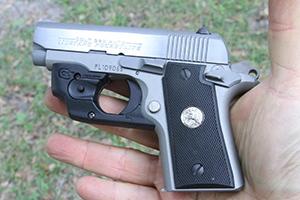
Colt 380 Mustang
The 5 Best Pocket Handguns For Self-Defence

The Colt 380 Mustang is reaching a point where it’s marginal as a pocket pistol at 5.5 inches. Nevertheless, I still consider it one of the best pocket pistols around.

For 1911 enthusiasts, this compact little pistol provides the same basic design, making it extremely easy to make that switchover. I found it extremely easy to use, probably because I learned to shoot in the Army, back when the 1911 was the sidearm of our nation’s military.

This scaled-down version of the venerable 1911 comes with a polymer frame, cutting down the weight, which is important for a pocket pistol. However, this isn’t a .45 caliber, like the 1911. But I won’t hold it against it. For a pocket pistol, .380 ACP is an acceptable choice.

Heizer Defense PKO-45

The 5 Best Pocket Handguns For Self-Defence

I had to include the Heizer Defense PKO-45 on the list, because it is a .45. Being a .45 fan, as far as I’m concerned, there isn’t a better self-defense round on the market.

It was developed as the standard Army sidearm round, when they were dealing with Moro tribesman attacking them while hopped up on drugs.

I’ve always figured that if I was going to be attacked by a criminal, there was a good chance of them being on drugs, so I carry a .45.

But this is a very unique .45, the only one small enough to be called a pocket pistol. At 5 inches long, it’s the shortest pistol on our list. It also has a unique design, where the guide rod is above the barrel, allowing the barrel to remain fixed. The company claims that this makes for less recoil and I wonder if it would make the pistol more accurate as well. It’s a lot heavier than the other pistols on our list, which should help with the recoil; but it’s a .45, so that should be expected.

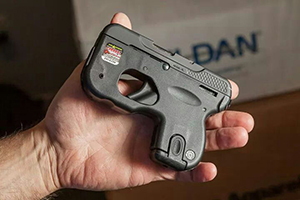
Taurus Curve
The 5 Best Pocket Handguns For Self-Defence

The Taurus Curve is by far the most unique firearm on this list. It is a pocket pistol that was truly designed to be a pocket pistol and nothing else.

When the folks at Taurus designed this pistol, they threw out the rule book and tried to think of what a pocket pistol needed to be.

The most distinctive aspect of this pistol is its shape, which is curved. Most shooters need some time to get used to it. But that smooth, almost aerodynamic shape makes it very easy to draw and holster the pistol, probably the biggest problem for users of any pocket pistol. It is actually curved to fit your body and has a clip to attach it to your pocket, waistband or belt. This makes the curve one of the most concealable firearms around.

I complained earlier about the sights on my LCP; well, this one doesn’t have any iron sights at all. What it does have is a line engraved and painted white on the back of the slide to help you aim, should you need it. But the real gunsight is a laser sight and tactical light, both built into the front of the gun. for the close range instinctive shooting its designed for, that’s a whole lot better.

The 5 Best Pocket Handguns For Self-Defence

A pocket gun is a worthy addition to anyone’s collection. While they probably won’t become the main gun in anyone’s closet, there are times when having one can be convenient. Not only can they be concealed where other guns can’t; but any of them make a good backup piece, for those times when you might feel the situation warrants it.

The Government Can Take Your Property From You Without Your Consent (Even If They Are Paying You For It) Then You Don’t Really Have A Right To Own Private Property At All. And You’re Truly Not Free.

There is no version of eminent domain that coincides with liberty. On the contrary, the two ideas are antithetical to each other. As a champion of liberty, John Locke stated in his Second Treatise of Civil Government, “For I have truly no Property in that, which another can by right take from me, when he pleases against my Consent.”

In other words, if the government can take your property from you without your consent — even if they are paying you for it — then you don’t really have a right to own private property at all.

The deeper debate about whether the idea of private property still exists at all in a country where property taxes, construction regulations, and other limitations are demanded is one best saved for its own discussion. For now, we’ll stick with the commonly held assumption that private property does exist.

Under that assumption, we can move a few years forward from Locke’s writings and quote the Fourth Amendment to the United States Constitution, a part of what we know as the Bill of Rights, which states that “The right of the people to be secure in their persons, houses, papers, and effects, against unreasonable … seizures, shall not be violated”.

However, the very next amendment goes on to say that “private property” shall not be taken for “public use” without “just compensation.” Therefore, the idea of eminent domain is Constitutional, even if it still seems antithetical to liberty.

Leaving any argument about personal liberty or the foundations of our country aside, a much older idea from a much higher Authority lays plain the wrongfulness of eminent domain: Thou shalt not steal.

Despite any philosophical reasoning, eminent domain remains the law of the land. The essence of the outrageous but accepted practice is that a government — federal, state or local body — may confiscate land from individuals who legally own it, usually compensating them with at least the current market value of the property, for public needs.

In some cases, it is even more outrageous: The land is given over to private developers for various reasons. The justifications are always that the confiscation is for the greater good of the public. The original landowner has no legal recourse against the actions. That doesn’t sound like the land of the free, does it?

Recent examples from Memphis, St. Louis and North Carolina clearly show that the threat of eminent domain is alive and well in America.

Memphis

A privately owned mall in a suburb of Memphis, Tennessee, called Raleigh has had issues with crime and gangs over recent years. The city began plans to demolish part of the mall and make it a “town center” last year, including moving a police precinct and a library branch onto the land.

The owners of the mall said that they hadn’t been contacted by the city about the plans, and they refuse to sell part of the property to the city. Now the city has begun eminent domain proceedings to take the property from them. The reason is supposedly because of the crime issues. The question is: If the police can’t keep an area safe without seizing property, should residents of Memphis expect new police precincts to start popping up in every neighborhood area with a crime problem – and land in those areas seized, too?

St. Louis

St. Louis, Missouri, is considering using eminent domain to oust both a private developer and individual homeowners from a swath of property in order to retain the National Geospatial-Intelligence Agency’s facility within city borders. The agency, which provides mapping and satellite support for the military, employs 3,000 people and brings in an estimated $2.4 million in annual earnings taxes, although it is exempt from property taxes because it is operated by the federal government.

The agency is moving because it needs a bigger facility, but the area the city wants used is partly occupied. Although there is a lot of abandoned and demolished space in the area, there are still several long-time homeowners who refuse to give up their land and move. The remaining property is owned by a private developer, who has pledged not to use eminent domain against the remaining residents.

In response, the city is proposing using eminent domain against both the homeowners and the developer. Their tax revenue losses apparently outweigh the property rights of the land owners.

North Carolina

The North Carolina House passed a bill on Feb. 10 that would prevent government from using eminent domain to seize property and then sell it to a private developer. Only “public use” cases would be allowed. The problem: The same measure has passed the house on at least four other occasions in the past, only to be shut down in the state Senate each time.

At least this measure attempts to rein in the expansion of eminent domain’s scope, returning it to the description given in the Fifth Amendment’s language. Someone with a high level of cynicism might even argue that the measure is anti-private sector by cutting all private parties out of the picture and keeping all of the benefits in government hands.

The eminent domain playground is one we would do best to only play in when absolutely necessary, because the path forward is well-known. The destruction and abolition of private property is one of Marx’s 10 planks of Communism espoused in the Communist Manifesto. Turning over seized private property to a business friendly with the government is a staple of fascism. Either way, individual liberty and rights are sacrificed in the name of the “public good.”

Are You Prepared For 19th Century Living? (You May Not Find Yourself Living In The 19th Century Tomorrow, But What If?)

Those that are aware of the EMP commissions report have probably also heard the statement that this type of event would suddenly transport everyone involved back to the 1800’s almost instantly. It is also possible that up to 90% of the population could die within 2 years due to the sudden lack of modern technology. It does not matter if it is an EMP, CME, cyber attack or terrorist attack on the grid, the results will be largely the same.

This is a sobering notion that you can either believe or disbelieve. If you think it is all hype you need only to go back to your daily activities and hope it never happens and leave your survival to someone who will do something if it ever happens. For those hardy souls that take responsibility for their own fate and that of their family, it falls to you to determine what this type of event will mean for you. An event of this magnitude will affect different people in different locations in different ways.

It is important to first realize what changes you will likely see following this event. To understand this you must look at what a 19th century lifestyle would look like to you. Understanding these differences will help you to determine what plans you need to make ahead of time to adjust to these changes in a way that will allow you to survive. Here are some of the things you will face with a collapse in modern technology and this does not even take into account problems you will face from the ill prepared.

19th Century support systems included the following

Sailing ships for cargo and human transport
Steamships for cargo and human transport
Steam locomotives for cargo and human transport
Horses and wagons for cargo and human transport

Horses, mules and oxen for cultivation and harvesting
Root cellars for common storage
Ice houses to store ice cut in winter
Open pollinated seeds for planting
Livestock manure for fertilizer
Local mills for processing grains
Shallow dug water wells for fresh water
Manual tools for building and repairs

Developed systems for kerosene, whale oil and candle making for lighting
Mechanical power systems for factories and machinery
Telegraph lines for communication
Local craftsmen to build and repair items
Human and animal means to produce coal

Wood stoves for cooking and heating
Outhouses for sanitation needs
Buildings designed for natural ventilation

Limited clean water systems
Limited hospitals and doctors
Limited drugs, medications and medical equipment
Limited firefighting capabilities
Limited law enforcement capabilities

Physical currency of silver and gold
Banks utilizing paper records

Many of these systems exist today only in museums or historical sites and in insufficient quantities to support the population we now have. So simply going back to 19th century living standards would be impossible for the vast majority of people even under the best of circumstances. This brings to light the conclusion that 90% of the population would not survive long term under these conditions.

Assuming this type of event did occur, what would you need in advance to insure your survival? That is a question many people need to ask but most will not simply because their belief system would be shattered if they acknowledged potential threats and that they need to be responsible for their own lives.

There is the potential for many types of catastrophic events that we may never see but the potential should be enough to cause reflection on the individuals part to at least ask the important questions for their own survival. To prepare mentally as well as physically is important to survive the worst of the potential events we could face. You may not find yourself living in the 19th Century tomorrow, but what if?

Urban Survival: When the Cities Fall Apart, These Strategies Will Keep You Alive

Collectively speaking, there are many of us who have been preparing for emergencies and have read our fair share of prepper fiction and watched enough apocalyptic thrillers to know that the higher the population density, the more dangerous it can be in a disaster. As well, when resources like food and fuel have to be transported from outside the city limits, then your survivability rate lessens. So what about those who have to live in the city? Should they just stop prepping all together? Would they stand a fighting chance at surviving?

According to the last census, 80.7 percent of the U.S. population lives in urban areas. In fact, many choose to live the higher populated areas because of better paying jobs and better school systems, so the probability of a shtf event happening while you are in the city is likely. As well, because many commuters spend a large majority of their time away from their homes.

Urban Survival – Is It Even Possible?

If you are forced to stay in the city after a disaster occurs, all is not lost. I do believe urban survival is possible, but you may need to get creative. Ultimately, being able to survive in an urban setting during a major ordeal depends on multiple factors: specifically, the type of disaster, if basic infrastructure is still up, where you are located, what you have with you and your skill sets. Moreover, I believe that whether you are surviving in an urban setting or a rural one, you need the same things for survival: food, water, shelter, protection (sound familiar?). The difference is you will need to rely more on your skills and ingenuity in finding opportunities to use to your advantage in a post-disaster city. In both scenarios, rural and urban survivors will also have to find a way to carry on for long durations. That is, when your short-term reserves are tapped out, what’s your long-term plan?

Above all, the population density will be your greatest threat and your resources will quickly be depleted. If you are not familiar with Selco’s story from SHTFSchool.com, he survived in an urban setting and tells his story and shares ways that he and others survived on his website. Some of the critical needs he outlines are:

Food – No city can feed it’s people on its own and when the supply trucks stop running, supplies will quickly be depleted. It is wise to have food on hand.

As well, I highly recommend storing a variety of heirloom seeds. These can be to grow sprouts for emergency nutrition and for gardens for long-term food sources. You could also plant edible flowers. Not only will they be lovely to look at, but they will provide sustenance when you need it the most. Alternatively, if you can locate food packing plants or warehouses in your city, that may be a good place to allocate additional food reserves if yours runs out. This article can provide information on foraging for weeds.

Water – Municipal water sources can become tainted and it will be up to you to locate water sources. Water could look crystal clear and still contain very dangerous contaminants. – so avoid this all together and make sure you have some water stored away. Your skills will come in handy here if you are actively practicing how to survive. Here are five different ways to find water when there is none to be had. As well, consider having a map on hand of water sources in close proximity to you.

Fuel – Due to so many who are getting out of dodge and leaving the city, the fuel stores will quickly be depleted. As well, this could be problematic for running your generators. Many preppers prefer to have some alternative fuel on hand, or even biomass briquettes. Make sure you follow the proper safety guidelines for storing fuel, especially those who live in apartments.

Many suggest solar panels as a good power alternative. While I like this idea, I think it can also draw unwanted attention, so further security measures should be put in place to hide the solar panels from view.

Power – The failure of the power grid will prevent things from getting back to normal. When the majority of the population realize things aren’t going to change any time soon, and the above listed items aren’t available, there will be breakdowns to the level of social collapse. Many feel this very reason is why it’s important to be ready to bug out on a moment’s notice. If you are caught in this, it could be very dangerous.

What You Will Be Up Against

While it is entirely possible to survive in the city, you need to know what you will be up against. I realize that I am painting a very bleak picture, but those who stay behind and choose not to bug out are either under prepared, trapped in the city or have enough skills and know-how to make it on very little stored resources. The latter will not be the majority. Therefore, be prepared for roaming gangs, thugs and desperate individuals who have resorted to a more primal version of themselves. They will do what they need to in order for their needs to be met. If they haven’t eaten in days, they will smell your food from miles away, so you need to know how to mask the smells of your food or you could be welcoming unwanted visitors whose primary focus is to take what you have.

Security will be crucial in surviving in an urban setting and having a group you can depend on will make it all the more secure. Many neighbors and friends living in close proximity will band together and help to fortify the homes or find a suitable location in a higher location so you can get a bird’s-eye view of the scenery.  One aspect that the city offers is a plethora of building materials to use for fortifying a home. If you start looking for fortifying plans now, you will have a better idea on what materials you will need. I also cannot stress how important it is to have a means of protecting yourself. If someone kicks in your door, they aren’t only looking for a cup of sugar. Having a firearm and knowing how to use it could make all the difference in the world.

As well, having a keen grasp on communication skills with your group to ensure your perimeter is safe and make sure you will have alerts to possible threats. Communication is key and you should have multiple forms of communication, especially if a family or group member ends up being separated. One of the greatest threats we all face in cities are terrorist attacks. They target highly populated cities with dirty bombs and chemical weapons, and what we saw in Brussels that is can happen in peaceful cities, as well. Today it was Brussels. Where will it be the next time they hit America? Protecting yourself is the only option to ensuring your family has what it needs, including gas masks to gauge against chemical and biological attacks.

Start Finding Ways to Think Outside of the Box:

As I mentioned previously, to survive in a post-disaster urban setting, you will need to get creative in the way you work problems. Nothing should be wasted and everything could be used. Trash lying around can be repurposed and fashioned into something more useful. As well, start reading resources that can help you in your future preparations. The following books have great information on this type of survival.

Where There’s a Will, There’s a Way

The human species has always found way to survive and times aren’t all that different. In order to thrive in an urban environment, you need to be aware of what’s stacked against you: the lack of resources, possible threats, roaming gangs and violence. If you can change your line of thinking, utilize key skill sets and become more fluid with the problem, your odds improve.

Post-Collapse Survival Bartering: 10 Items That Will Be Worth Their Weight in Gold- In a post-collapse society, bartering will be the #1 way to find and obtain needed items

As a nation, we are faced with a host of different problems from many directions, both domestically and internationally.  The statistical improbability of a disaster occurring (such as war or economic collapse) decreases with the passage of time and the addition of other factors that lead into such.  For a couple of good “primers” on collapse and warfare (overall effects on societies and civilizations).

When any kind of society or civilization becomes unraveled, usually the nation’s cash loses its value within days at the most.  We’re going to cover a few general categories of items to keep for barter (meaning “regular” or frequent trade), citing individual examples within each category.  In The Prepper’s Blueprint, the idea of bartering was covered extensively and it isn’t always acquiring tradable goods, but also tradable services.

If a long-term emergency causes an end to our existing monetary system and an end to the exchange of fiat currency that our world currently operates in, people will resort back to bartering for skills and services in order to make transactions.

Living in a bartering environment means one must possess certain goods or skills that others find value in. As Brandon Smith writes on the subject, ‘If you wish to survive after the destruction of the mainstream system that has babied us for so long, you must be able to either make a necessary product, repair a necessary product, or teach a necessary skill.’”

Do Not Barter The Following Items:

Before I “hit the list,” I’m going to mention what I will not barter or only in an emergency, and why.

  • Ammunition, Firearms, or parts for firearms: The first two can be used against you, and the latter can be employed to fix something that can be used against you. [I will not barter with them ever]. That said, in a previous article, I mentioned the importance of knowing how to repair firearms. This is a barterable skill and one that will be of high importance in a post-collapse scenario.
  • Medicine: I need that for me and mine…and will not barter with it regularly [Only in an emergency…and never any antibiotics].
  • NBC gear and supplies: This takes the form of masks, suits, survey meters (Geiger counters), dosimeters, anti-rad tablets, and so forth [I will not barter with them ever].

10 of the Best Items for Bartering

  1. Fire Starting Materials: Books of matches, disposable lighters, wicks and flints for Zippo’s. All these guys are worth their weight in gold in the event of a collapse.  Check out some of these fire starting materials for ideas. The great thing about this is they are always needed, simple to trade, and they don’t take up a lot of space to store.
  2. Over-the-Counter (OTC) First-Aid supplies: Small tins of band-aids, aspirin, Tylenol, antacid tablets, gauze bandages, first-aid tape, alcohol prep pads, cough and cold supplies. These are differentiated from “medicine” as I mentioned not to trade, in that they are small, sundry-type articles that are valuable and in short supply when times are tough.  They are also easily affordable and do not take up much storage space.
  3. Multiple Toiletry Items: Hotel-types of small individual soap bars, shampoo bottles, towelettes, toothpaste, and shave cream. These you can ask a hotel or motel manager to order you an extra case: pay him beforehand and give him some extra.  In this way, they’ll all be in a big cardboard box and individually packaged up and ready to trade.
  4. Batteries: Will always be in short supply when you need them. It will be that way for others as well.  Just be careful to protect them from moisture when you store them and inspect them frequently to make sure there aren’t any leakages. There are certain batteries that are best for off-grid retreats. Having an excess of these will be a good investment. As well, there are ways to make a battery last (practically) forever and this could be great knowledge to possess when TSHTF.
  5. Sewing supplies: Yes, needles, threads, thimbles, and safety pins. Sewing kits cost almost nothing when you buy one in the discount stores.  Clothing repair will be very important, as good serviceable clothing will be in short supply.
  6. Small tins and cans of meat: This is always usable as your own supply, of course, and can be bartered. 3 to 6-ounce cans of things such as sardines, herring, chicken, tuna fish, and the likes…they are small enough to be able to trade, and they’ll be worth their weight in gold for their portability.
  7. Candles: especially in the form of tea-lights, and small candles (of the types listed as “emergency” candles). They are inexpensive and easy to barter for when there’s no electricity.  Remember to store them vertically, as if you lay them on their side, the wick will gradually “migrate” toward the bottom…and then the candle will be messed up.
  8. Miniatures of alcohol: Alcohol has many, many uses in a long-term emergency and it is excellent for trading, whether someone wants a drink or wants it to tincture something. We’ve already had discussions on this “WCTU-sensitive” subject.  If you’re against alcohol, once again, that is for you to decide.  Others may need the alcohol to deal with the vehemence of the “righteous indignation” of others.  Whatever the case, they will be easy to trade and in a “controlled” fashion.
  9. Tobacco: Once again, to paraphrase “Alice ‘N Chains,” it’s your A couple of cartons of cigarettes are easy enough to store, as well as a box or two of good cigars.  Remember: they have anti-helminthic properties…they’ll fight intestinal worms.  They’ll definitely trade. 
  10. Sweets and other luxuries: This to include some chocolate, powdered cocoa, honey (I recommend a big box of the individual packets for personal use), packaged jellies and syrups. They’ll trade, and they’ll be more than sought after.

This list is not meant to be exhaustive.  For instance, seeds are not covered in this list but would make a good bartering item too. I gave you what my personal favorites are.  I didn’t include precious metals, small tool sets, and about a thousand items you can mention or list.  I listed the top ten that I would want to use to barter that will be in short supply.  Use your best judgment and set your own standards for yourself, and stock up on what you need for an economic collapse of its own or one that is subsequent to another thing such as a war.  Afterward, you may find that you’ve made some sound investments…

Prepping For Mandatory Quarantine: Now is the Time to Prepare- Quarantines can last anywhere from days to months depending on the severity of the contagion. Now is the time to plan and prepare for this type of disaster.

When there is a concern for dangerous communicable diseases spreading, the CDC activates pandemic mitigation measures. Among these measures are isolation and quarantines. These are the first steps in protecting the public by preventing exposure to infected persons or to persons who may be infectedSocial distancing measures will follow in order to reduce further contact between the community. Quarantines can last anywhere from days to months depending on the severity of the contagion. Mandatory quarantines are backed up by laws and executive orders.

The official CDC website details ‘Specific Laws and Regulations Governing the Control of Communicable Diseases’, that even healthy citizens who have no existing symptoms would be forced to adhere to. 

Prepping For a Quarantine

At the very least, a mandatory quarantine would last as long as the contagion exists in the community. Therefore, plan on having at the very least one month’s worth of supplies. The three-day mandatory quarantines that occurred in Sierra Leone resulted in food shortages in many parts of the country because the citizens were not prepared. Now is the time to prepare your homes and your families for riding out this type of disaster.

This type of disaster is very unique in that you will not be able to run to the store if your supplies run out. A mandatory quarantine of this nature will require that the roads are clear of anything other than non-essential travel. Further, the shops and stores that you are dependent on will no longer be available; therefore, you need to have everything in place before mitigation measures are activated.

Ensure that your family has enough food and water to sit out for an extended event. Understand your community’s role in pandemic preparedness and find out their protocols. Further, do some research on previous quarantine events to inform yourself about what to expect. Some other suggestions are:

  1. Never touch your face with your hands. Your hands by default will be the most likely area of your body to contain infected debris.
  2. Avoid contact with others and limit social protocols – resist shaking hands, kissing, hugging. Limit your exposure as much as possible.
  3. Make a plan. Daisy Luther provides an excellent template for creating a pandemic plan. Further, to prepare for a pandemic event, if you plan on bugging out, do it before the quarantine measures are placed. Talk with country cousins about staying with them for the duration or begin fixing up any remote properties in preparation for a long term pandemic event.
  4. Make preparations and discuss with family members the family’s pandemic plan.
  5. Have some entertainment available to family members: board games, books, art supplies, etc.
  6. For those with special needs, ensure that you have supplies ready for them (infants, elderly, handicapped, etc.).
  7. Prepare a sick room for the home to limit family member’s exposure to the virus. If someone in the house is infected, then the person needs to be segregated to a room of the house and that room needs to be sealed off from the rest of the home either using plastic sheeting or duct-taped closed with limited interaction from other family members.
  8. Consider all items coming in from the outside to be contaminated and should be washed with antibacterial soap or a chlorine mix before handling with bare hands. Therefore, any item you pick up after the emergency begins needs to be handled accordingly.
  9. Seal air leaks in your home. All it takes is one particle of infectious material to doom your whole family. Since you will be indoors with not a lot to do, do this.
    Any time you come into near contact with anybody who is infected, you will need a shower. This is not an option.
  10. All common items in the house should be disinfected after use regardless if anyone is sick. The kitchen and bathrooms should be meticulously cleaned after use.
  11. If a family member dies in quarantine, seal off the room until professionals can deal with it. Don’t risk it. If you decide to take matters into your own hands, Wear long pants and long sleeves. Tuck your sleeves into your gloves. Dig your grave prior to moving the body. Spray the areas of the body you intend to touch with your bleach solution and wait 10 minutes before touching the body. Avoid touching the torso and head of the deceased person and only touch the disinfected extremities. Disinfect your clothing and shower after the operation is complete.
  12. Looters and crime waves can occur during this so ensure you have the means to protect yourself and your preps.
  13. Stay isolated until the quarantine is lifted.

In the event you have no choice but to leave your home, i recommends the following:

If you’re forced to exit your home, you’re going to want to be fully protected, and that includes covering your hands, eyes, nose, and mouth.

In addition to the N-95 respirator masks, you may also consider upgrading to the more expensive N-100 respirators recommended by the World Health Organization.

Or, go with a full facemask. Insofar as your preparedness efforts are concerned, you may also be able to kill two birds with one stone here and go with a full face mask that includes NBC (Nuclear, Biological, Chemical) protection like the US-made NATO SGE 400/3 Military Gas Mask.  If going with such a mask, be sure to include some NBC filters.

Pandemic Supply List

In The Prepper’s Blueprint, I have suggested these preps to purchase to prepare for pandemics:

  • One month supply of emergency foods that require no refrigeration.
  • Store 1 gallon of water per person per day, in clean plastic containers.
  • Plastic sheeting
  • Gallon-sized zip-loc bags
  • A portable toilet with disposable liners
  • Supply of nonprescription drugs and pain relievers
  • Cold medicines and decongestants
  • Stomach remedies
  • Duct tape
  • Anti-diarrhea medication
  • Essential oils
  • Vitamins that have immune-boosting enhancers
  • Electrolytes
  • Bleach or disinfectant
  • Soap
  • Tissues
  • Garbage bags to collect soiled clothing and bedding before they are washed.
  • A thermometer
  • Protective eye gear and/or face shield
  • Tychem protective suit and shoe covers
  • Disposable cleaning gloves (in quantity)
  • Hand wipes
  • Alcohol-based hand sanitizers or homemade hand sanitizer supplies
  • Protective clothing
  • Disposable aprons or smocks (at least 2 cases)
  • Duct tape for sealing off doorways and vents
  • Disposable nitrile gloves (2-3 boxes)
  • Garbage bags
  • N95 masks or N100 respirator masks for use when the sick person is coughing or sneezing (can be purchased at hardware stores and some drugstores)

Going Rogue: 15 Ways to Detach From the System- We must come to the understanding that there is no true safety net for us to fall into; it’s up to ourselves to get us out trouble.

I am inspired by the very definition of self-reliance: to be reliant on one’s own capabilities, judgment, or resources. Ultimately, it is the epitome of independence and lays the groundwork of what we are all striving for – to live a life based on our personal principles and beliefs.

It is a concept rooted in the groundwork  that made America great. Being dependent on our own capabilities and resources helped create a strong, plentiful country for so long. That said, the existing country as it is now is entirely different than when it began.

Why Are We So Dependent?

It is much too complicated to get into how the “system” was created. That said, the purpose is to enslave through debt and to create an interdependence that will force you and your family to never truly find the freedom you are seeking. It manipulates and convinces you to continue purchasing as a sort of status symbol to make you think you are living the good life; while all along, it has enslaved you further. Wonder why we have all of these holidays where you have to buy gifts? The system needs to be fed and forces you into further enslavement. If you don’t buy into this facilitated spending spree, you are socially shamed.

Collectively speaking, the contribution from our easy lifestyle and comfort level has created rampant complacency and a population of dependent, self-entitled mediocres. We no longer count on our sound judgement, capabilities and resources. The system keeps everything in working order so we don’t have to depend on ourselves, and furthermore, don’t want to.  I realize that many of the readers here do not fall into this collectivism, as you see through the ideological facade and know that the system is fragile and can crumble.

Breaking away from the system is the only way to avoid the destruction of when it comes crumbling down. When you don’t feed into the manipulation tactics of the system, or enslave yourself to debt, and possess the necessary skills to sustain yourself and your family when large-scale or personal emergencies arise, you will be far better off than those who were dependent on the system. Those who lived during the Great Depression grew up in a time when self-reliance was bred into them and were able to deal with the blow of an economic depression much easier. Which side of this would you want to be on? Those who had the patience to learn the necessary skills, ended up surviving more favorably compared to others who went through the trying times of the Depression.

Develop Personal Dependence

Now is the time to get your hands dirty, to practice a new mindset, skills, make mistakes and keep learning. Developing personal dependence is no easy feat and requires resolute will power to continue on this long and rambling path. To achieve this you have to begin to break away from the confines of the system. You don’t have to run off to the woods to be the lone wolf. Simply by asking yourself, “Will your choices and the way you spend your time lead to more independence down the road, or will it lead to greater dependence?”, will help you gain a greater perspective into being self-reliant. As well, consider ignoring the convenient system altogether. This will help you to detach yourself from complacency and stretch your abilities and your mindset.

Most of us can’t move to an off grid location. We have responsibilities that keep us from doing so. Therefore, live according to what is best for you and your family (common sense, I know) and do what you can. My family and I moved to the rural countryside four years ago to pursue a more self-reliant lifestyle. We learned many lessons along the way and are proud of where we are. Am I 100% self-reliant? No. But, I am venturing closer to living more self-reliantly with each skill I learn.

Here’s What You Can Do:

1. Inform Yourself – Understand that there are events on the horizon, some large-scale and some personal that could wreak havoc on your quest toward a self-reliant lifestyle. Informing yourself and planning for them will be your best in staying ahead of the issue.

2. Learn Skills – When you can depend on your skills to support you and your family’s life, then the outside world doesn’t affect you as much. When large groups of people in a general area possess self-reliant skills, it makes your community stronger.

3. Get Out of Debt – It is paramount that each of us begin actively practicing economic self-discipline. Many believe that because of the ease in money confiscations from the banks, you shouldn’t have all of your money stashed there. Diversifying your money and investing in long-term ways to preserve your wealth will ensure you have multiple ways to pay the bills.

4. Store food – Having a supply of food to subsist on in times of dire circumstances ensures that you are not dependent on having your basic needs met by someone else. This gives you the control of what food to put in your body and how you want to live.

 5. Start raising your own food – With the high prices of meat at the store these  days, many are turning to raising their own meat sources. Rabbits, chickens and fish can easily be started in backyard homesteads.

 6. Prepare for emergencies – Preparing for the unlikely emergencies is a way to insulate yourself from the aftermath. The simplest way to begin preparing is to prepare for the most likely events that can affect you, and go from there.

7. Repurpose – We must take steps to stop being a throw away society and get back to a population who makes do with what they have.

8. Make Your Own Supplies – You have everything around you to survive, but many can’t look outside of the box to see how they can use what they have to survive. Having versatile preparedness supplies saves space and can serve multiple uses that can double up as ingredients to make soaps, medical supplies, etc.

9. Use Up What You Already Have or Find Another Use – Being self-reliant means using up what already have. This is a crucial principle of being self-dependent. Saving leftover construction supplies, food, clothing, etc., can be reused for another day.

10. Live More Naturally – Life is chaotic these days and many of us feel we have to keep up with everyone else. It’s time to forget that and start living more simply and naturally.

11. Grow Your Own Medicine – With the vast medical advancements in the Western world, we are turning our backs on the first medicine – natural medicine. It’s time we begun exploring a more mindful, natural existence.

12. Grow Your Own Food – The cost of making healthy decisions about the food we put into our body is eating our budgets alive. We want the very best foods for our family, but buying solely organic products can be costly. All the while, you are questioning the legitimacy of this produce. Is it genetically modified? Where was this grown? Was it exposed to salmonella or another food-borne pathogens? What was the type of water used to grow it? There comes a time when you want to throw your hands up and shout, “That’s it, I’m doing this myself.”

13. Be Flexible – I often tell those who are preparing that the single most important thing you can do is continue to be flexible in your preparedness efforts. Doing so gives you leeway in your planning and backup planning, as well as helps you move more fluidly through the aftermath. This concept can be applied in non-emergencies, as well. Self-reliance can help us be more flexible in our life and our decisions.

14. Barter Better – Bartering for goods and services was the first currency that went around. Let’s be honest, everyone is up for a good deal. Using self-reliant skills, you can use these as leverage in bartering. As well, having a surplus of survival/preparedness items can also help you make good bartering deals.

15. Teach Your Kids – We must teach our children how to be more mindful and self-reliant. After all, we do not want to continue the cycle of having a dependent, self-entitled population. By informing them, we are setting them upon a self-sustaining path for life.

We must come to the understanding that there is no true safety net for us to fall into; it’s up to ourselves to get us out trouble. How easily you land depends on how reliant you were to begin with. Adopting certain concepts as your new life’s code will help you on your path.

Many of us share a common goal: to be free from the shackles of the system. This goal doesn’t come over night. You have to work at it, invest in it and ultimately, change your way of thinking. The point is, we are all at different places in our preparedness efforts, so don’t get discouraged! Continue on the pace, keep learning and step-by-step, you inch closer and closer to that goal.

How To Make Pemmican: A Survival Superfood That Can Last 50 Years

Packed with calories and nutrition and able to be packed and stored for long periods, pemmican is often called the ultimate survival food.

Created by Native Americans and adopted by European explorers of the New World, pemmican is a concentrated blend of fat and protein from lean, dried meat. The word “pemmican” is derived from the Cree root word “pimi” for “fat” or “grease.” Traditionally, the meats used in pemmican included bison, moose, deer and elk.  Beef can be used as well.

The secret to pemmican’s long shelf life is in properly rendering the fat from the meat. The pemmican can be stored in airtight containers without refrigeration in a cool, dark and dry place. If made and stored property, it can last for years or even decades. There are reports of some pemmican lasting 50 or more years.

The Lost Ways – Pemmican Tutorial Guide


The Lost Ways website has an awesome step-by-step how to make Pemmican video. While having a written guide is important and helpful to a lot of people, watching a video guide is even better.

They cover a few things I did not and demonstrate how to make your own pemmican.

This video is an excellent pemmican making resource.

Let’s look at the steps to making pemmican.

1. Dry the meat. Cut off all the fat, and then slice the meat as thinly as possible before placing it on a drying rack in full sunlight. Another option is to place the meat directly on your oven rack with the oven temperature at its lowest setting. The meat needs to be dry enough that it cracks when you try to bend it. Adding salt will extend the shelf life. The more salt you add, the longer it will last.

2. Grind the meat. Now you need to grind the meat until it is powder form. If you do not have a food processor, mince the meat and then grind it in the blender. If you are in a survival situation, chop the meat into small bits and then crush it into a powder.

3. Render the fat. Now heat the fat in a crockpot, in the oven or on the stove. Use a low setting for several hours, and be sure to stir the fat occasionally until it has stopped bubbling. Then pour it through a mesh strainer to filter out any pieces.

4. Mix the meat with any dry extras. If you are using any nuts or dried fruit, such as raisins, dried cherries or cranberries, mix it with the dried meat in a large bowl (leaving room for the fat). Note: These extras reduce the shelf life.

5. Add the fat. Next, add one part of fat per every two parts of the dried meat mixture (add more fat if needed). Slowly pour the hot liquefied fat into the meat mixture and stir well.

6. Add any wet extras. If you are adding wet ingredients such as honey, maple syrup or peanut butter, mix them in now. If the mixture seems too wet, you can add a little almond meal to get it to your desired consistency. You also may add salt to taste if you like. Note: These extras will reduce the shelf life.

(Here are 23 survival uses for honey that you didn’t know about.)

7. Form the pemmican. A popular method is to spread the mixture into a casserole dish. Let it get firm before cutting it into squares or bar sizes. If you prefer, you can form the mixture into balls.

8. Store the pemmican. Once cut, place it into airtight containers and store them in a cool, dark and dry place. You also store your pemmican in zippered bags in your freezer.

There are many varieties of pemmican, but they all use the basic instructions. Many other recipes begin with a 1:1:1 ratio of basic ingredients such as:

1 cup of dried meat

1 cup of dried fruit or berries

1 cup of melted animal fat

Pemmican is surprisingly filling and can supply energy for hours.

You can experiment to find the recipe that works well for you. Label the pemmican you make with the ingredients and proportions you used, so you will know what combinations work well and how you might want to tweak a certain recipe a little in the future.

Preparedness Hacks: Once a nuke is heading your way, you might think that there isn’t much left to do, but you would be wrong!

Because we will show you America’s natural nuclear bunkers that are also EMP proof. When the sirens start wailing, all you need to do is pick the closest one to your home, where you can take cover before it hits.

Introduce Yourself (Example Post)

This is an example post, originally published as part of Blogging University. Enroll in one of our ten programs, and start your blog right.

You’re going to publish a post today. Don’t worry about how your blog looks. Don’t worry if you haven’t given it a name yet, or you’re feeling overwhelmed. Just click the “New Post” button, and tell us why you’re here.

Why do this?

  • Because it gives new readers context. What are you about? Why should they read your blog?
  • Because it will help you focus you own ideas about your blog and what you’d like to do with it.

The post can be short or long, a personal intro to your life or a bloggy mission statement, a manifesto for the future or a simple outline of your the types of things you hope to publish.

To help you get started, here are a few questions:

  • Why are you blogging publicly, rather than keeping a personal journal?
  • What topics do you think you’ll write about?
  • Who would you love to connect with via your blog?
  • If you blog successfully throughout the next year, what would you hope to have accomplished?

You’re not locked into any of this; one of the wonderful things about blogs is how they constantly evolve as we learn, grow, and interact with one another — but it’s good to know where and why you started, and articulating your goals may just give you a few other post ideas.

Can’t think how to get started? Just write the first thing that pops into your head. Anne Lamott, author of a book on writing we love, says that you need to give yourself permission to write a “crappy first draft”. Anne makes a great point — just start writing, and worry about editing it later.

When you’re ready to publish, give your post three to five tags that describe your blog’s focus — writing, photography, fiction, parenting, food, cars, movies, sports, whatever. These tags will help others who care about your topics find you in the Reader. Make sure one of the tags is “zerotohero,” so other new bloggers can find you, too.

Design a site like this with WordPress.com
Get started