How America Can Restore Confidence In Its Elections- America’s political dysfunction requires rational reform. Fortunately, many necessary changes don’t require constitutional amendment.

There is little doubt that President Trump, before both the 2016 and 2020 elections, did all he could to undermine confidence in their results. In 2016, he was abetted by his opponent, whose delayed and graceless concession was followed by state recounts ostensibly requested by the hopeless Jill Stein campaign but also abetted by that of Mrs. Clinton.

Trump’s current challenge to results, though supported by little evidence, is a harbinger of things to come, since the massive additional use of early and postal ballots, understandably adopted because of the virus crisis, creates opportunities for future fraud, bribery, or manipulation if perpetuated as a routine matter. The willingness of many Republican elected officials to support the challenges is itself a product of political dysfunction resulting from the nationalization of campaign finance resulting from ‘reform’ legislation and the gerrymandered and highly polarized districts resulting from the reapportionment decisions and the second Voting Rights Act. Rational reform requires attention to causes as well as symptoms.

What are the needed reforms—almost all within the power of the states and the Supreme Court—that don’t require a constitutional amendment?

First, return to election day voting for nearly all ballots, assisted by state legislation making it a paid holiday. The United States lags behind most nations in the world in the number of paid holidays and has one of the longest average work weeks, so this does not cast an undue burden on employers.

Second, limitation of ‘early voting’ to the Saturday before election day, eliminating the danger of the ‘cooping’ of voters that in an earlier time killed Edgar Allen Poe. In our time, games are played with the siting of early voting places in the neighborhoods favored by local political majorities. If there were only one early voting day, on a weekend, all precincts could be opened for that purpose, and all voters would be voting on the same state of facts without distortions resulting from intervening events.

Third, insistence on the sanctity of the secret or Australian ballot, which does not exist for remotely cast ballots which can be cast by persons other than the voter, or cast for monetary reward. The latter danger requires that cell phones, tablets, and ‘selfies’ be prohibited in voting booths, as they are in at least a dozen states. In August 2020, the ever-helpful Hillary Clinton endorsed the pernicious practice of taking ‘selfies’ of marked ballots. The limited number of absentee ballots cast by travelers and the infirm should be subject to stringent safeguards, including delivery by election day, and limitation on the number of ballots that a single person may witness.

Fourth, obvious safeguards against impersonation, including purges of voter rolls every two years by comparison of precinct lists and voting records with the Social Security death index.

Fifth, identification requirements. Persons not producing a voter I.D.–issuance of which was facilitated for drivers and welfare recipients by the Motor Voter law–should be photographed and fingerprinted at the polling place and their votes segregated and counted separately, subject to later challenge. The resulting records should be useable for election purposes only. Even third-world countries think it appropriate to mark the hands of persons who have already voted.

Sixth, insistence on the principle, set forth in Chief Justice Rehnquist’s concurrence in the Bush v. Gore case and at issue in the Pennsylvania case on the Supreme Court’s docket, that election rules be changeable only by legislatures, not by courts, lest state courts be dragged even further into the ‘political thicket’ adverted to in Justice Frankfurter’s dissent in Baker v. Carr. Insistence also on the proposition that challenges to election laws and arrangement of ballots be brought before and not after elections.

Seventh, removal of the limitations on individual campaign contributions in federal elections coupled with stringent disclosure requirements, which will de-nationalize campaign finance by relieving most candidates of the need to solicit PACS and interest groups.

Eighth, relaxation by the courts–or if need be by federal legislation–of the requirement of exact numerical equality in redistricting and reapportionment, in favor of a rule which would allow unlimited disparities in district size resulting from the use of political subdivisions or pre-determined combinations of political subdivisions to define districts. The change should be adopted so long as seats are apportioned among districts according to the method of equal proportions used in apportionment of the House of Representatives among states, and so long as a specified minimum of voters (43% or 45%) is necessary to elect a majority of the seats being apportioned. An article by Professor Michael McConnell makes the case for this reform (24 Harvard J. of Law and Public Policy 103 [2000]); something very much like it was nearly adopted by the Supreme Court in the little-noticed  case of Brown v. Thomson, 462 U.S. 835 in 1983.

Ninth and finally, there should be increased resistance to creation of so-called ‘voting rights districts’ purportedly required by the 1982 amendments to the 1965 Voting Rights Act imposing a ‘disparate impact’ test on district configurations disadvantaging minority groups. Since the 1975 amendments to the Voting Rights Act gave protection to groups other than blacks, this raises the specter of a war of all against all, in which each group “owns” districts electing its most fanatical members. The result is legislative bodies resembling those elected under a system of proportional representation, in which extreme sects control nearly all districts, and are represented by increasingly hidebound and geriatric representatives. Challenges to such districts can properly be brought on the basis of the unequivocal prohibition of racial discrimination in the franchise contained in the Fifteenth Amendment, as enforced in the famous case of Gomillion v. Lightfoot and as early as 1927 in Nixon v. Herndon, 273 U.S.536, in which Justice Holmes for a unanimous court said that “colour cannot be the basis of a statutory classification affecting the right set up in this case.”

These changes are not designed to, and will not, disadvantage Democrats and racial minorities. In the short run, they may somewhat diminish the number of black congressmen, particularly those who Professor Lani Guinier deems to be “authentic”. In the long run, they will reinforce the bonds uniting representatives with all the citizens of their districts, and with local governments.

Memorandum: How The 2020 Election Could Have Been Stolen- A political scientist examines the evidence and concludes that widespread fraud took place.

As a citizen who is also a political scientist, I have tried to do due diligence to assess what happened in the recent election. Who won what and at what level and what does it mean? And what about the charges of vote fraud? People keep asking me what I think, and I decided to write down the conclusions I have reached to date and on what grounds. Because charges of vote fraud have called the outcome of the presidential election into question, I have paid particular attention to them.

This memorandum is not written to persuade. It merely records my findings and reflections. Few people are really open to persuasion in any case—not just on political subjects but on any subject about which they care and on which they have adopted certain views. Diehard partisans for a certain outlook will refuse to have their beliefs questioned, and so will many others. They will be no less dismissive of a document challenging their opinions if it is full of footnotes and appendixes. Such a document will, indeed, make them resist it even more. As for the relatively few people who are truly open-minded, they will not find another person’s observations dispositive. They will, as they should, want to consider the evidence on a contested matter for themselves.

I hope that I am not deceiving myself when I say that I have not reached my conclusions regarding the 2020 election because of partisanship. I am a close student of politics, but have never belonged to a political party. If I have a bias, I suppose it is that of one who is largely alienated from both of the American parties and who believes that both of the presidential candidates in 2020 have major flaws.

It should be obvious that the issue of the legitimacy of the election is too touchy and inflamed for my view of what happened to settle it for anyone. There are numerous legal challenges to the vote in a number of states. Those charging fraud have had just a few weeks to prepare their cases, and much of the supporting material is hard to understand for those who are not political scientists, computer geeks, or statisticians. Whatever the veracity of the allegations, there is a large and growing amount of material to consider—this despite the media mantra that the charges are “baseless” or “unsupported.”

It is widely recognized that especially in their coverage of matters related to Donald Trump, the mainstream media long ago abandoned any pretense of impartiality. It is nevertheless remarkable that the media have not investigated even the more plausible-looking of the allegations of vote fraud. It did not take me long to realize that the charges were far more serious and credible than the American public had been told. In fact, this memorandum reviews the election with special reference to the allegations of fraud. I had barely begun looking into them when I noticed that, very shortly after the election, European experts on American elections, some of whom also had advanced expertise in statistics, had published articles or given interviews in which they claimed to have seen clear evidence that the election was “rigged”! In Sweden of all places, an expert on American elections published a series of articles showing that Biden’s win in the swing states simply could not be explained without assuming major fraud. Since Donald Trump is even more disdained by the media in Europe than he is here, I was surprised to hear a few European commentators refer to the presidential election as if its fraudulence should be obvious to all. I became even more curious about puzzling aspects of the election, but was still skeptical. You can find support for virtually any point of view on the Internet.

This summary of my views of the election will for the most part be confined to political-sciency observations. Although electronic ballot stuffing may be the most important of the fraud allegations, I will, because of a lack of proficiency in statistics and computer science, not go into depth on the vote anomalies that experts in these fields regard as by themselves sufficient proof of fraud.

General Trends in the Election

I will begin by offering some observations that may be elementary to a political scientist, but that, despite their large and obvious significance, have not received the kind of public attention that should have been automatic and plentiful.

First of all, the historical record indicates that when a sitting president increases his vote totals relative to his original election, he is reelected. President Trump did increase his vote, not by hundreds of thousands of votes, but by over 10 million (not counting votes of which his supporters claim that he was robbed). Trump’s support among Hispanics, a group often described as hostile to him, expanded to 32 percent, even more among Hispanic men. His support among blacks increased this year by 50 percent.

Another basic fact: certain American states almost always go with the winner. Florida and Ohio are at the top of that list, partly because they reflect the demographic composition of the U.S. as a whole. If you add Iowa, you can predict with high confidence that the winner of those three states will also be the winner of the presidential election. Trump not only carried these states, he won them very comfortably, Ohio and Iowa by about 8 percent, Florida by over 3 percent. In 1960, the outcome in these states was not the same as in the general election. What presidential election was that? Nixon-Kennedy. That is the election that was almost certainly stolen for JFK in Illinois (Cook County) and Texas. That is the election that produced the anomaly of someone winning the presidency without carrying Ohio. After 1960, winning the presidency only while carrying Ohio again became the norm. In 2020, however, Biden somehow managed without Ohio.

Let me next be a little more granular. There is another measure of who is the winner in a presidential election that is even more persuasive. This measure indicates that there was something very strange, even inexplicable, about the outcome of this year’s presidential election in the swing states. There are numerous bellwether counties across the United States that almost always vote for the winner in the national election. There are counties that voted for the winner in the presidential elections from 1980 to 2016. In 2020, with rare exceptions, these counties suddenly reversed course. They did not vote for the person regarded as the winner, but for Donald Trump. Nineteen counties have been identified whose vote is viewed as a particularly good predictor of the outcome in the presidential election. They are virtually certain to go with the winner. It has been assumed that if a candidate carries 15 to 16 of those 19 counties, he is also bound to be the winner of the presidency.

How, then, did the 2020 election turn out in those bellwether counties? Trump won no fewer than 18 of the 19! Even more telling, he improved his performance in these counties. A county having been on the list of voting for the winner of presidential elections for a very long time does not by itself make the outcome there more predictive, but a few examples of such counties are striking. Valencia County in New Mexico has mirrored the outcome of every presidential election since 1952. In that county, Trump won by 10 percent in 2020. Indiana’s Vigo County voted for every president except two since 1882. This year, Trump carried that county by 15 percent. Westmoreland County in Virginia has failed only twice since 1928 to vote for the winner of the presidential election. Trump carried that county by 16 percent. These are but specific illustrations of a trend in the competitive counties that favored Trump about as emphatically and overwhelmingly as was possible.

Given Trump’s nationwide surge, it is not surprising that, contrary to media predictions of “a blue wave,” the Republicans actually gained 13 seats in the House of Representatives. Not a single Republican incumbent House member lost—not a single one! Although far more Republicans than Democrats were up for reelection in the Senate, they were able to defend their hold on that body. (Run-offs for two Senate seats in Georgia are, as of this writing, have yet to be held.) Republicans generally did very well down-ballot. They captured both houses in the New Hampshire legislature.

Biden Had a Huge Money Advantage

It is relevant that the successes for Trump and his party took place despite unexampled, almost unbelievable levels of spending on the part of the pro-Biden, anti-Trump cause. The Democrats vastly outspent Republicans. Michael Bloomberg all by himself spent something like $5 per voter in Florida. Another example is the staggering amounts spent by billionaires, notably Big Tech executives. Much of it has been referred to as “dark money” because it largely bypassed campaign finance laws. One example is Mark Zuckerberg’s pouring some $500 million into the election to boost the Biden vote. He did so in part by donating about $350 million to the Center for Technology and Civic Life, which worked to induce voter participation in carefully selected parts of states and municipalities. This included offering election authorities money for putting voting drop-boxes in certain areas. It has been widely charged that these efforts were not just blatantly partisan but violated laws forbidding some ways of inducing people to go to the polls.

It can also be argued that by censuring information detrimental to Biden during the campaign, the social media giants offered him a huge in-kind contribution. It is hard to put a monetary value on the virtually unbounded support for Biden in the mainstream media, but it obviously gave him an enormous advantage.

Still an Uphill Struggle

Biden’s tremendous financial advantage is bound to have helped him, but we can tell now that he was nevertheless fighting an uphill battle. He had to overcome a Trump surge. Consider some important and very striking indications of how Biden did. An astonishing example of his meeting strong resistance is that he won fewer American counties than any previous modern American president-elect. Obama won 873 counties in 2008. Biden barely captured 500 in 2020! (Trump won about 2,550 counties.) The record of a winner? His percentage of the vote per state did not even match that of Hillary Clinton. Democrats are ordinarily dependent on the black vote being 85 to 90 percent in their favor to win a presidential election. Biden was not very close to that percentage. He received a much lower percentage of black votes than Obama and an even lower percentage than Hillary Clinton. Among black men he did not reach 80 percent, for Democrats a worrisomely low number. The Democrats’ share of the Hispanic vote was also down. Not only did Biden not have any coattails, he dragged his party down in congressional and state elections. Winners of the presidency routinely pick up seats for their party. Biden lost 13 seats.

The Magic Touch

You might have thought that for Biden to win the election, he would have had to equal or surpass Hillary Clinton’s vote percentages around the country. But in general, the opposite was the case. He underperformed in the bigger cities, Democratic strongholds that are crucial to Democratic victories in presidential and other elections.

When you consider all of these patterns, one feature of the presidential election stands out as remarkable—as very difficult to explain. That feature casts grave doubt on Biden’s supposed election victory. What raises disturbing questions is the paradoxical exception to Biden’s weak national performance. For some reason, in just a few states, the reported Biden vote ran counter to the national trends just described. And where was this wholly aberrant pattern? Why, in the battleground states, which Trump had won in 2016. They are the states that Biden now simply had to win to capture the presidency. In those states, Biden somehow dramatically reversed his substandard trend in the rest of the country! As mentioned before, Biden could win only one of the 19 battleground counties around the U.S., but he supposedly won all of the battleground states! How could he possibly accomplish this feat? By performing very much better in the bigger cities in the battleground states than in the bigger cities elsewhere.

Biden, the elderly, almost passive, candidate who generated no discernible popular enthusiasm—in this respect the very opposite of Trump—somehow got his numbers in Philadelphia, Detroit, Atlanta, Milwaukee, and other cities in the swing states up sufficiently to “win” the corresponding states, in Georgia by a very small margin. The turnout in these Democratic cities was by the standards of history and as compared to cities outside of the battleground states very high. There are charges that in many precincts in heavily Democratic counties in Michigan, the number of votes cast exceeded the number of registered voters. In Pennsylvania, at least one truck with already completed ballots is alleged to have been brought in from New York. In the same state, laws for how to vote and review ballots were simply set aside by local officials. In previous years, a substantial percentage of mail-in ballots had been invalidated for obvious errors. This year, when new and partly improvised voting procedures had brought in a vastly larger number of mail-in ballots, many of them deposited in drop boxes, almost none of them were invalidated in Democrat strongholds.

In the large states of Florida and Texas, with many large cities, the vote count was completed on Election Night. Not so in cities in the swing states. There, on the evening of Election Day, counting was suddenly stopped. Election observers and most others were sent home. CCTV captured what happened then at a voting place in a convention center in central Atlanta, Georgia. A few election workers stayed behind, pulled out suitcases with ballots from under a covered table and, without the legally required election observers, fed them into the voting machines into the early morning. A large number of sworn affidavits testify to local officials in the cities flagrantly violating election laws and indiscriminately accepting votes that had been challenged. There were charges of ballots being inserted into voting machines more than once. Among the many examples of “traditional” vote fraud and “irregularities” in city political machines was that dead people, non-citizens, and non-residents voted. Many votes were not cast by the people who had actually registered.

After official vote counting had been suspended, tabulations of votes took place that have astounded statisticians and computer experts. These experts have not been able to explain them except as a result of fraud. The issue here was electronic “ballot stuffing.” Votes recorded showed a uniform pattern in several states, such as giving a set percentage of votes to Biden and Trump. Some batches of electronically recorded votes were all or virtually all for Biden.

There were also various “glitches,” explained as “human errors,” some of which were electronically “corrected.” People familiar with election fraud in foreign countries have pointed to the sudden suspension of vote counting and “glitches” as characteristic of computer-generated fraud. The voting machines used in the battleground states have been shown to be rather easily manipulated, e.g., by inserting algorithms to continuously shift votes from one candidate to another. It is surely relevant that in this election, the aggregated election data were connected to the internet and even to servers abroad. That there are methods for manipulating elections through electronic voting is well known to experts, not least in the intelligence field.

The Question of Plausibility

Because I lack specialized knowhow, I will not try to assess what European and American experts on American elections and statistics have claimed are utterly implausible electronic vote tabulations in the battleground states. The signs of manipulation abound, and recorded vote anomalies are said to be so glaring as to be statistically inexplicable except as the result of fraud. In Pennsylvania, one big batch of some 550,000 votes is reported to have been 99.4 percent for Biden, a figure that is beyond preposterous even if you assume it to consist solely of votes from Democratic strongholds. There were similar reports elsewhere, as in Fulton County, Georgia.

This startlingly lopsided addition of votes occurred after the departure of poll watchers. Another example of statistically inexplicable tabulation is that a series of precisely equal amounts of votes went to the same candidate. Although Trump did very well in the rest of the country, improving on his 2016 performance, none of these anomalous batches of votes worked in his favor. Experts who have compared the Dominion voting machines in the battleground states to machines of a different kind in other states have asserted that, on average, the Dominion machines routinely shifted 2 to 3 percent of the votes from Trump to Biden. Data scientists and statisticians claim that in many places, Trump votes just disappeared, or batches were switched from the Trump column to the Biden column. In DeKalb County, Georgia, one batch of over 12,000 votes was switched to Biden.

People technically proficient in these matters have speculated that some of the most easily detectable anomalies are due to fraudsters having become desperate upon noticing an even stronger Trump vote than they had expected. To make up for this development, they had to improvise. They took risks, became careless, and could not easily hide the traces of their actions.

What emerges, then, is not merely a picture of local scofflaws stuffing ballots the old-fashioned way and ignoring legal requirements, but of organized manipulation on a large scale. The problems pertain to different aspects of the voting. One was how the voting system was built and could be used, one was how the receipt and counting of ballots was conducted, and yet another, probably the most important, was how votes were digitally recorded. It was that last aspect that revealed the just-mentioned anomalies. Yet the problematic features in each part of the overall process all worked to the same end—reversing the national electoral trends favoring Trump.

It should be noted that the possibility of fraudulent use of the Dominion voting system used in the swing states and many other states had been raised long before this election. In fact, this system has been criticized by DEMOCRATS as being highly manipulable, susceptible to engineering outcomes. Senators Ron Wyden, Bernie Sanders, and Elizabeth Warren are among the prominent Democrats on record as criticizing the fraud potential of this voting system.

Yet in this election, in which the hated Trump was on the ballot, we are supposed to believe with the mainstream media that this system operated with high integrity and that there is nothing to see here?

How could the notion of widespread vote fraud look farfetched to many? A partial explanation is that the vast majority of people are simply unaware of the many strange, suspicious aspects of the election that have been summarized here. The mainstream media have chosen to not report on them. Probably the most important explanation is that most people are more intensely partisan than they will admit even to themselves. Many are simply unwilling to face and accept that the Donald Trump they so despise might actually have done it again, received the support of the American people. No, no, that is just an unacceptable possibility! Electoral fraud must be a groundless “conspiracy theory.”

The defensive use of the term “conspiracy theory” is telling. Contrary to common belief, the fact that something is a conspiracy theory does not by definition refute it. The question for any open-minded person is: is the alleged conspiracy actual or imaginary? Most people have no problem accepting the idea of a “conspiracy” in the case of, say, organized crime. During the Cold War, there was no problem with believing in the “communist conspiracy.” The evidence for both conspiracies was overwhelming. Over the last few years, we have lived through deep, protracted, intense hostility to Donald Trump. Attempts to cripple or get rid of him have evinced considerable ruthlessness, and they have obviously involved much elaborate collusion. Considering these circumstances, why would a conspiracy to commit election fraud in 2020 appear implausible?

Political scientists and well-informed journalists know that, for generations, political “machines” in America’s bigger cities, virtually all of them one-party enclaves, have been more or less prone to voting “irregularities.” Many Democrats concede this fact, partly because it can affect Democratic primaries. Fraud could be used against some of them or against candidates they prefer. Now take into account the deep hostility to Trump. Is it far-fetched to think that many who consider Trump a great evil persuaded themselves that getting rid of him by almost any means was appropriate, even morally heroic? As for ways of ensuring the desired outcome today, add to the old practices of the city machines the opportunities for fraud introduced by computer software and hacking. Consider at the same time the state of our culture, including the complicity of city leaders in the street riots and crime waves of recent months. Given all of these circumstances, is it not more plausible to expect vote fraud in the 2020 election than not to do so?

People who are naïve about American politics and/or have not weighed these factors may find it hard to believe that hundreds of people might collude in major fraud. But to repeat, large-scale collusion in many aspects of life is nothing new or unusual. “Traditional” American vote fraud has been a political version of organized crime, the latter, too, involving hundreds of people operating in different states. Indeed, traditional vote fraud has sometimes involved cooperation with organizations like the Mafia. An example: as a former bootlegger, the father of JFK, Joseph Kennedy, had good contacts in the mob, and in 1960, he got Sam Giancana, the Chicago Mafia boss, to fix the Democratic primary in West Virginia for JFK, a Catholic who was running in a heavily Protestant state. The expected winner, Hubert Humphrey, was incredulous. Reliable operatives can organize efforts locally without even knowing who are pulling the strings. Today computers, software programs, and hacking are facilitating compartmentalization and greatly limiting the number of individuals required to achieve large objectives. There is of course a risk that whistleblowers will expose some part of the fraud, as is beginning to happen.

Because the vote in the battleground states is what decided the 2020 election, I will not try to assess charges of fraud in other states—which is not to imply that there was none.

The Courts 

But have not the courts refused to give credence to charges of vote fraud? First of all, those making the charges have had to do so on the basis of just a few weeks of gathering data and affidavits and on the basis of electronic evidence and statistics hard to explain to laymen. They have also had to present their cases in largely unfriendly or hostile venues. The court system is no exception to the fading of America’s traditional culture and rule of law. For decades, American law schools have undermined that tradition by teaching law as a vehicle for implementing social justice and other “progressive” causes. Especially in the big cities, but also in the general court system and in the federal courts, highly partisan views are ubiquitous. Nobody familiar, for example, with Bruce Frohnen’s view of the current court system will expect much by way of devotion to law and impartiality in the older sense.

Some Republican-sponsored judges may blur this picture, but they, too, are operating in and are influenced by this judicial environment. They fear being attacked in the media and being shunned by their peers. Specifically, who wants to become known as taking seriously charges made by “Trump partisans”? Timid judges can avoid controversy and unwanted media attention by choosing not to “interfere” in the “political process.” Probably an even more important reason for the reluctance of courts to hear cases about electoral fraud in this presidential election is that the attitudes toward Trump of the vast majority of judges range from discomfort to sheer hostility. Most of them would like for this crude bully, this disrupter of the system to which they belong, to be simply gone. Would they like to hear charges of election fraud and thus seem to help Trump continue his sledgehammer attack on “the swamp” and “the deep state”? Not hardly, as John Wayne might say.

Resistance to Evidence

I have always been a close student of epistemology—of why people believe what they believe—and I argue that only rather unusual individuals, persons with a sensitive, active conscience and strong character, are likely to resist the ever-present inclination to look away from evidence that suggests they may be wrong. On the basis of all of what I have learnt in the last several weeks, I do not hesitate to say that those who are flatly dismissing the charges of voter fraud in this year’s election are not the open-minded observers that they might imagine themselves to be. Consciously or subconsciously, they are anti-Trump partisans or reflexively partisan Democrats, unless, like most people, they are merely timid souls fearing the consequences of offending others.

I hasten to add that being willing to look at the evidence of fraud does not, by itself, make a person a Trump sympathizer. Do many Trump supporters who charge fraud have an inclination to jump to preconceived conclusions? Of course they do—it goes without saying. But that has little to do with what actually happened in the election. The evidence and the indicia are what they are, whatever the motives of those who brought them to our attention.

Final Thoughts

Those who are partisans by temperament will assume that any charges of vote fraud in the 2020 election must spring from partisan motives. They will find it hard to believe that someone might simply want to find out what actually happened in the election, that a political scientist or responsible citizen will want to understand what the election tells us about the state of his country. What motivated me to study the election and write down my observations was not a preference for one of the two presidential candidates. It was these three things: (1) a desire to know what happened in the election; a political scientist has certain obligations; (2) a suspicion, derived in part from studies of trends in American politics, that in the 2020 election something went egregiously, disturbingly wrong; and (3) the media’s absurdly one-sided treatment of the candidates and their blacking out the charges of fraud.

There is still much to learn about this year’s election. Open-minded people have to examine the evidence of fraud for themselves, that is, do what, from the beginning, Trump haters in both parties refused to do. I am embarrassed that sophisticated Europeans should have offered real and incisive analyses of suspicious features of the election while the American mainstream media simply turned a blind eye. Their facile dismissal of vote fraud and their running interference for one of the candidates is a striking example of the kind of lack of civic responsibility that one associates not with a constitutional republic but with a banana republic. Coming on top of years of more and more blatant partisanship, the conduct of the media during the 2020 campaign and after the election illustrates that the old spirit of America constitutionalism, the rule of law, and dispassionate, respectful public debate are fading away. Instead of countering the ever-growing cynicism, demagoguery, and corruption of politicians, the media are aligning themselves with and facilitating the efforts of one side in the current battle.

What I have found to date regarding the election makes it impossible for me to accept the media version of the election outcome. It is the opposite of implausible to think that Joe Biden “won” this election because of fraud. He “won” in the battleground states by small margins. Just exactly what is the case will not be known until the charges have been thoroughly investigated. My review of the evidence is far from exhaustive, and I cannot categorically exclude the possibility that the fraud was insufficient to steal the election for Mr. Biden or the possibility that the charges will in the end turn out to have been exaggerated. Yet what I have found to date gives me no choice but to conclude that in the 2020 election, there was major and organized vote fraud and that it probably stole the election.

Those who simply assume the legitimacy of Biden’s victory are willfully ignoring too many paradoxes and strange but convenient coincidences, too many vote analyses, and too much sworn testimony. Some “mainstream” American commentators are grudgingly and belatedly conceding that, yes, well, there is always “some fraud.” But they add that there is nothing unusual about this election. My comment: if, indeed, there is nothing unusual about the election, then election observers from some international body ought to have been called in long ago. I’m afraid that what I have discovered confirms my general view that America keeps sliding into lawlessness.

The possibility that the election was fraudulent is by itself frightening—ominous. Whether or not major fraud actually took place, this year’s election will among millions and millions of Americans who already distrust the established order further undermine faith in its legitimacy. Also, the “winner” that this system produced this year will be perceived as corrupt, frail, and mentally challenged. Biden had to be literally dragged over the finish line. Because the American media have actively concealed who Biden is, it will be a while before the American people as a whole find out. When they do, it is likely to add to the anger over what is already viewed as a stolen election.

That Biden is the very embodiment of the old establishment helps explain why he is being treated with tolerance by establishment Republicans. Biden is for them in some ways much less of a threat than Trump. As for world leaders, many of them intensely dislike President Trump, but, whatever they say publicly, they are likely to regard the election of the physically and mentally challenged and otherwise greatly compromised Biden as a sign that the United States is losing its vitality and creativity. And, they will all wonder, who are the people behind the scenes who are making the real decisions?

I feel the need to add one thing. In our deteriorating society, ruthless operatives will take full advantage of all the “nice” Americans who think of themselves as civilized defenders of the best of America—the “nice” people who will (nobly they think) not lower themselves to that other level of demagoguery and shenanigans. They will tell themselves that America passes through ups and downs in cycles and that in time the country always returns to balance and normalcy. I find that view as superficial as it is common. In our current historical situation, in which the decline of traditional standards continues apace, the ruthless will rather easily outmaneuver the nice, which is why the young of today had better prepare for rough times.

By May 1918, Hundreds Of Thousands Of Troops, Many Of Whom Were Already Infected, Began Boarding Troopships Bound For Europe, And The Crowding Onboard The Ships Created Ideal Conditions For The Virus To Explode Further- How Generals Fueled 1918 Flu Pandemic to Win Their World War

Just like today, brass and bureaucrats ignored warnings, and sent troops overseas despite the consequences.

The U.S. military has been forced by the coronavirus pandemic to make some serious changes in their operations. But the Pentagon, and especially the Navy, have also displayed a revealing resistance to moves to stand down that were clearly needed to protect troops from the raging virus from the start.

The Army and Marine Corps have shifted from in-person to virtual recruitment meetings. But the Pentagon has reversed an initial Army decision to postpone further training and exercises for at least 30 days, and it has decided to continue sending new recruits from all the services to basic training camps, where they would no doubt be unable to sustain social distancing.

On Thursday, the captain of the aircraft carrier USS Theodore Roosevelt, on which the virus was reportedly spreading, was relieved of command. He was blamed by his superiors for the leak of a letter he wrote warning the Navy that failure to act rapidly threatened the health of his 5,000 sailors.

Secretary of Defense Mark Esper justified his decision to continue many military activities as usual by declaring these activities are “critical to national security.” But does anyone truly believe there is a military threat on the horizon that the Pentagon must prepare for right now? It is widely understood outside the Pentagon that the only real threat to that security is the coronavirus itself.

Esper’s decisions reflect a deeply ingrained Pentagon habit of protecting its parochial military interests at the expense of the health of American troops. This pattern of behavior recalls the far worse case of the U.S. service chiefs once managing the war in Europe. They acted with even greater callousness toward the troops being called off to war in Europe during the devastating “Spanish flu” pandemic of 1918, which killed 50 million people worldwide.

Itwas called the “Spanish flu” only because, while the United States, Britain and France were all censoring news about the spread of the pandemic in their countries to maintain domestic morale, the press in neutralist Spain was reporting freely on influenza cases there. In fact, the first major wave of infections in the United States came in U.S. training camps set up to serve the war.

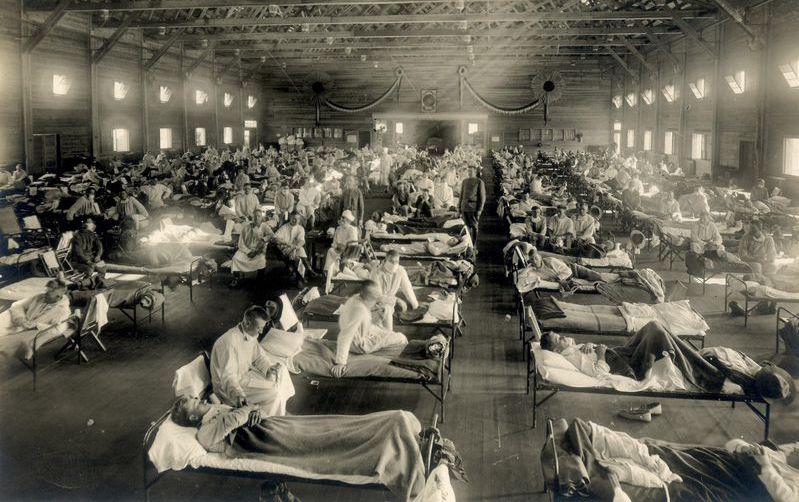
Abundant documentary evidence shows that the 1918 pandemic actually began in Haskell County, Kansas, in early 1918, when many residents came down with an unusually severe type of influenza. Some county residents were then sent to the Army’s Camp Funston at Ft. Riley, Kansas, the military’s largest training facility, training 50,000 recruits at a time for the war. Within two weeks, thousands of soldiers at the camp became sick with the new influenza virus, and 38 died.

Recruits at 14 of 32 large military training camps set up across the country to feed the U.S. war in Europe soon reported similar influenza outbreaks, apparently because some troops from Camp Funston had been sent there. By May 1918, hundreds of thousands of troops, many of whom were already infected, began boarding troopships bound for Europe, and the crowding onboard the ships created ideal conditions for the virus to explode further.

In the trenches in France, still more U.S. troops continued to be sickened by the virus, at first with milder illness and relatively few deaths But the war managers simply evacuated the sick and brought in fresh replacements, allowing the virus to adapt and mutate into more virulent and more lethal strains.

The consequences of that approach to the war became evident after the August 27 arrival in Boston harbor, when visitors brought a much more virulent and lethal strain of the virus; it quickly entered Boston itself and by September 8, had appeared at Camp Devens outside the city. Within ten days, the camp had thousands of soldiers sick with the new strain, and some of those infected at the camp boarded troops ships for Europe.

Meanwhile the lethal new strain spread from Camp Devens across the United States through September and October, ravaging one city after another. From September onward, the U.S. command in France, led by Gen. John Pershing, and the war managers in the War Department in Washington, were well aware that both U.S. troops already in Europe and the American public were suffering vast numbers of severe illnesses and death from the pandemic.

Nevertheless, Pershing continued to call for large numbers of the replacements for those stricken at the front lines, as well as for new divisions to launch a major offensive late in the year. In a message to the War Department on September 3, Pershing demanded an additional 179,000 troops.

The internal debate that followed that request, recounted by historian Carol R. Byerly, documents the chilling indifference of Pershing and the military bureaucracy in Washington to the fate of American troops they planned to send to war. After watching the horror of lethally-infected soldiers dying of pneumonia in the infected camps, acting Army Surgeon General Charles Richard strongly advised Army Chief of Staff Peyton March in late September against sending troops from the infected camps to France until the epidemic had been brought under control in the surrounding region, and March agreed.

Richard then asked for stopping the draft calls for young men heading for any camp known to be already infected. March wouldn’t go that far, and although the October draft was called off, it was to resume in November. The War Department acknowledged the heavy toll the pandemic was taking on U.S. troops in October 10, informing Pershing that he would get his troops by November 30, “if we are not stopped on account of Influenza, which has now passed the 200,000 mark.”

Richard then called for troops to be quarantined for a week before being shipped to Europe, and that the troopships carry only half the standard number of troops to reduce crowding. When March rejected those moves, which would have made it impossible for him to meet Pershing’s targets, Richard then recommended that all troop shipments be suspended until the influenza pandemic was brought under control, “except such as are demanded by urgent military necessity.”

But the chief of staff rejected such a radical shift in policy, and went to the White House to get President Woodrow Wilson’s approval for the decision. Wilson, obviously recognizing the implications of going ahead under the circumstances, asked why he refused to stop troop transport during the epidemic. March argued that Germany would be encouraged to fight on if it knew “the American divisions and replacements were no longer arriving.”Wilson then approved his decision, refusing to disturb Pershing’s war plans.

But the decision was not carried out fully. The German Supreme Command had already demanded that the Kaiser accept Wilson’s 14 points, and the armistice was signed on November 11.

The disastrous character of the U.S. elite running the First World War is clearly revealed with the astonishing fact that more American soldiers were killed and hospitalized by influenza (63,114) than in combat (53,402). And an estimated 340,00 American troops were hospitalized with influenza/pneumonia, compared with 227,000 hospitalized by Germans attacks.

The lack of concern of Washington bureaucrats for the well-being of the troops, as they pursue their own war interests, appears to be a common pattern—seen too, in the U.S. wars in Vietnam, Afghanistan and Iraq. Now it has been revealed once again in the stunningly callous response of the Pentagon to the coronavirus pandemic crisis.

In the 1918 war, there was no protest against that cold indifference, but there are now indications that the families of soldiers put being at risk are expressing their anger about it openly to representatives of the military. In a time of socio-political upheaval, and vanishing tolerance for the continuation of endless war, it could be a harbinger of accelerated unraveling of political tolerance for the war state’s overweening power.

Another solution to lockdowns: The Constitutional lawyers | There is a constitutional line that can’ t be crossed for ANY reason. A government can’t take away the freedom of citizens because some disas ter has occurred. This goes beyond the question of whether the disaster is real or imagined. It doesn ’t matter. Freedom to live, to live out in the open, to work, to do business, to survive, is untouch able.

There are a few principles involved in any effort to change the direction of fascist control.

One person alone doing or saying something may have an effect.

Two hundred people—each on his own—doing or saying the same basic thing—will have a significant effect.

Two hundred people—some alone and some together—will have a larger effect.

A person who sees himself as isolated and alone will probably not believe his actions have any effect. So he stays silent. He could have an IQ of 90 or 190; he stays silent.

The primary mistake lockdown opponents are making comes down to: failure to see the bigger picture.

And the big picture is composed of many different individuals and groups taking action of various kinds—which add up to a tsunami of our own, against the wall-to-wall messaging of the lockdown liars and fascists.

I’ve read a great deal of what constitutional lawyers have to say about the lockdowns. I’m not talking about heroic lawyers who are actively filing lawsuits against governments. I mean lawyers who are largely spelling out problems in bringing these cases to court.

Problems having to do with judges, with the intricacies of the law, with past court decisions, with technical issues.

If two hundred of those lawyers instead turned their attention to BASIC constitutional foundations, and published papers and essays and spoke out on THAT subject, we would see a tide beginning to turn in our favor.

Constitutional lawyers are, first and foremost, supposed to understand the underlying meaning and purpose of the Constitution, which takes precedent over minutiae.

If they can’t see the forest for the trees, they should pack up their offices and seek other work.

So let me repeat what I’ve been saying for months. There is a constitutional line that can’t be crossed for ANY reason. A government can’t take away the freedom of citizens because some disaster has occurred.

This goes beyond the question of whether the disaster is real or imagined. It doesn’t matter. Freedom to live, to live out in the open, to work, to do business, to survive, is untouchable.

There are a million ways to spell this out. I challenge constitutional lawyers to DO IT. Not just a few lawyers. MANY. Go to work. Your area of focus is the jackpot of all legal focuses: the Constitution itself, why it is there, what it means, what it is FOR.

What are you waiting for? The sky to collapse?

Why aren’t 200 or 5000 of you turning into tigers?

Are you trying to prove to doomsayers that they’re right and we’re all irretrievably going down the drain?

Is that your final response to the constitutional crisis we’re facing?

Is the measure of your worth the amount of dilly-dallying you can perform on the minutiae surrounding the eternal struggle for FREEDOM?

Realize that if a few hundred of you publish and speak out, you can have an enormous effect.

I understand that some of you know very little about gaining publicity for your views. I do know something about gaining publicity for the truth. If a group of 20 of you comes to me, I will give you what I can to help you achieve visibility.

Turn your attention to writing and speaking on behalf of the people, instead of the media and your colleagues. Come to grips with what first inspired you to study the founding documents of the Republic—before the practicalities of your profession turned you into…

Whatever you are now.

If you think I’m being unduly harsh on you, take a look at the economic and political landscape. Look at the devastation. Ask yourself under what banner this tyrannical operation marches. And what it is doing to people.

Everyone speaks of “culture” these days. Well, you constitutional lawyers can influence the culture directly. You can make a heroic stand. You can make your words have fire, just as the words of Paine and John Adams and Samuel Adams ignited minds, when it counted.

Be heroes, not clerks.

Spend Carefully This Christmas- In this extraordinary time, the least conservatives can do is to direct our dollars conscientiously. Retail is the frontline of the culture war.

It’s okay. You are conservative. It’s not a pose, but a life choice. That’s why you don’t think there’s any great honor in defending life, family, freedom or private property; it’s simply an obligation. In fact, a priori you don’t think that anyone should be rewarded for their convictions either. You distrust boycotts, campaigns against big corporations, and generally resent changing your consumption habits. In the end, like a true Chestertonian soldier, you don’t fight because you hate what’s in front of you, but because you love what’s behind you. You have no idea how I understand you!

Nor do you like the idea of your countrymen dying on the battlefield, and yet you know that sometimes it is necessary to support righteous wars and watch as your brethren are sacrificed for what they believe in. Well, good. We are now in the midst of a culture war. And it is unpleasant to tell you this, but you may have in your pocket the key to victory. I have come, as you see, to spoil your day.

I’m sure you’ve wondered why most big corporations surrender to politically correct language, gender ideology, or radical environmentalism. Take a look at their websites and you’ll see hundreds of campaigns that speak only one language: the language of the left. Rarely will you find the big brands betting on defending life or encouraging large families. This is not by chance. Advertisers know that conservatives are more reluctant to change products, so they don’t care about their ideals. Instead, they seek to rouse the lowlier progressive instincts. The left-wing consumer is more sectarian. Nor is he or she instilled with a Christian sense of forgiveness: If a brand runs a pro-life campaign, it is likely to ruin its economic empire for a long time.

Moreover, in the song of ideologies, the music of the left always sounds more pleasant. Even if they are siren songs.
However, you like to read books, newspapers and magazines that defend your ideas, and you are moved when an advertiser makes a minimally Christian Christmas advert, anything that goes beyond that typical Central European Christmas postcard, featuring a snowy old mountain house lit by colorful lights, with reindeer running around outside. A postcard that, I can only imagine, is supposed to congratulate you on the arrival of winter, or the snow, or that reindeer continue to be born, or who knows what.

We often complain about cultural Marxism’s success in diluting our Christian values into empty sentiment at best, or transforming our society by some obscure Masonic plot at worst. I do too, I don’t deny it. In fact, as a columnist, my main contribution to the world are complaints about as much as possible, for as long as possible. And yet, I’ll admit that embedded in my complaints there resides a certain cynicism. Because, although I would rather avoid typical Democratic rhetoric, we have the world we are building for ourselves.

Your actions and your convictions can go hand in hand. That might make you feel better. I have no intention of becoming some bestselling self-help author for unmotivated conservatives, but you do have an easier time being consistent than any liberal.

Imagine for a moment that you really believed that you could stop the climactic apocalypse by changing your car out for a donkey; that getting rich is a civil sin; that you have to pay as many new taxes as can be thought up in one night of drinking; and that, in accordance with your secularist ID card, we owe everything to Mother Nature, which would place you in an uncomfortable debt to the cockroach, the cactus and the damn bat. Fortunately, as a conservative, you prefer to proclaim, like the poet Luis Alberto de Cuenca, “that you don’t believe that the West is a barbaric monster / dedicated to the sordid task / of destroying the planet” and perhaps you even agree with him that “multiculturalism is a new fascism / only tackier.” For these reasons amongst others, barring what liberals might think of you, you’ve got it easy to be coherent.

William F. Buckley gave us the key to the survival of 21st-century conservatism: “I will not cede more power to the state. I will not willingly cede more power to anyone, not to the state, not to General Motors, not to the CIO. I will hoard my power like a miser, resisting every effort to drain it away from me. I will then use my power, as I see fit.”

I make these reflections because a very special Christmas approaches—marked by the pandemic, by health restrictions, a certain generalized sadness and a worrying economic and employment situation. And perhaps the time has come to stop complaining and take action. And no, I’m not suggesting that you dress like a Cristero rebel and start setting fire to snowy shop windows lacking religious motifs. Maybe it’s enough that you pay a little attention to where you’re putting your dollars this time. That’s part of your power.

I’m sure you do. Many readers already subscribe to this wonderful publication or to other essential magazines for the dissemination of conservative ideas. Many already gift books by worthy authors, or movies with good moral values, or even try to buy their presents from brands that promote virtue. I am only suggesting that this Christmas we do it even more.

The Internet and social networks make it difficult for brands that want to advertise or finance conservative publications, or support campaigns for Christian institutions. In some Western countries, for example, right-wing radio stations have serious difficulties in getting advertisers, because sooner or later, some announcer will say something that offends somebody—regardless of the truth of the statement—and a culture-war campaign is unleashed on the network and its sponsors.

But, what can you and I do? It’s simple. We need to start convincing ourselves that we must pay for what we love. A book from a Christian publisher can be, too. Buying toys, candy, or clothing from a small family business of good, committed people is also a gift. I am not suggesting that we wage war against anyone, or even that we give up buying whatever we want from big multinational corporations (fortunately we love freedom!), but perhaps it is appropriate to ask ourselves: are we financing with our hard-earned dollars the big food, clothing, or technology companies that have made theirs the UN’s unfortunate Millennium Goals, incorporating them into their corporate social-responsibility policies? Or worse still, are we still buying products from Chinese communist giants?

The richest multinationals only understand the language of money. And your gesture is probably irrelevant. But if your gesture becomes a trend, be sure they will get the message. The ideological policies that these companies develop are not voted on in an election, it’s true. But they are still voted on: you vote for them every time you take out your card to pay for one of their products.

Personally, I prefer to see all this in a positive light. Your purchases in a small family business, and your support for a young singer who has renounced selling himself to the postulates of the prevailing cultural Marxism, can be the key to him, to them, to us, being able to carry on fighting on the front lines of this battle; fighting the fight, day after day, for all of those further away in the rearguard. It is the fight for your ideas. For the free world you believe in. For what you are and what you represent.

I told you that I had come to ruin your day. That wasn’t quite right. I also came to ruin your shopping list and your letter to Santa.

Anonymous: All Signs Point To World War 3:Hacktivist group Anonymous has released a chilling new video – urging people around the world to prepare for World War 3 – warning that the US is maneuvering its military for battle.

Hacktivist group Anonymous has released a chilling new video – urging people around the world to prepare for World War 3 – warning that the US is maneuvering its military for battle.

All the signs of a looming war on the Korean peninsula are surfacing,” the group claimed in a six-minute clip, posted on YouTube over the weekend.

Unlike previous world wars, although there will be ground troops the battle is likely to be fierce, brutal and quick. It will also be globally devastating on environmental and economical levels,” Anonymous warn.

Thefreethoughtproject.com reports: For more than a decade, North Korea has been unsuccessfully attempting to prove its military might to the world through a series of failed missile launches, nuclear proliferation, and threats to anyone who attempts to come near their border. And for more than half a century, the US has enabled it. In spite of threatening nuclear war on the world, most countries have never acted. However, the Trump administration appears to want to change that.

As the Free Thought Project has faithfully reported, tensions between the US and North Korea continue to rise — almost intentionally — as the US rattles the saber at the crazy Kim Jong-Un.

Just last week, North Korea, feeling pressure of encroaching American and allied vessels, threatened to make a ghost ship of a U.S. nuclear submarine.

“The moment the USS Michigan tries to budge even a little, it will be doomed to face the miserable fate of becoming an underwater ghost without being able to come to the surface,” railed propagandic North Korean outlet, Uriminzokkiri, quoted by the Independent.

“Watching as each country moves strategic pieces into place,” Anonymous notes, in their signature distorted robotic voice behind the Guy Fawkes mask. “But unlike past world wars, although there will be ground troops, the battle is likely to be fierce, brutal and quick. It will also be globally devastating, both on environmental and economical levels.”

The very real threat of nuclear war would most assuredly be devastating on all levels.

Instead of attempting to achieve peace, the US is responding in kind with intercontinental ballistic missile tests of their own.

To show Kim Jong Un that launching test missiles won’t be tolerated, the United States, last week, launched an unarmed intercontinental ballistic missile (ICBM) from a US Air Force base in California — just seven days after a previous launch.

“This is a real war with real global consequences,” Anonymous explains. “With three superpowers drawn into the mix, other nations will be coerced into choosing sides, so what do the chess pieces look like so far?”

“The citizen will be the last to know, so it is important to understand what the other nations are doing,” the group stated.

“The pragmatic Chinese, it seems, are starting to lose their patience.”

The Chinese do appear to be making moves for a potential conflict.

Last month, China’s Foreign Minister warned that an armed conflict with North Korea may break out “at any moment,” urging Washington and Pyongyang to tone down their hawkish rhetoric and realize the price to pay for both sides if a new Korean War were to start.

Shortly after the warning, China issued a notice to its citizens telling them to leave North Korea at once.

Anonymous also points out that war is likely imminent due to President Donald Trump meeting with the murderous president of the Philippines, Rodrigo Duterte.

Duterte, who compares himself to Hitler and publicly calls for the extrajudicial murder of his own citizens for using drugs, was invited to the White House by Trump.

“When President Trump starts reaching out to those like President Rodrigo Duterte of the Philippines to assure they are on the same page, one must start to wonder,” Anonymous says in the video. “However, even Duterte has advised the US to back away from Kim Jong Un.”

“Prepare for what comes next,” warns Anonymous.

“We are Anonymous.
We are Legion.
We do not forgive.
We do not forget.”

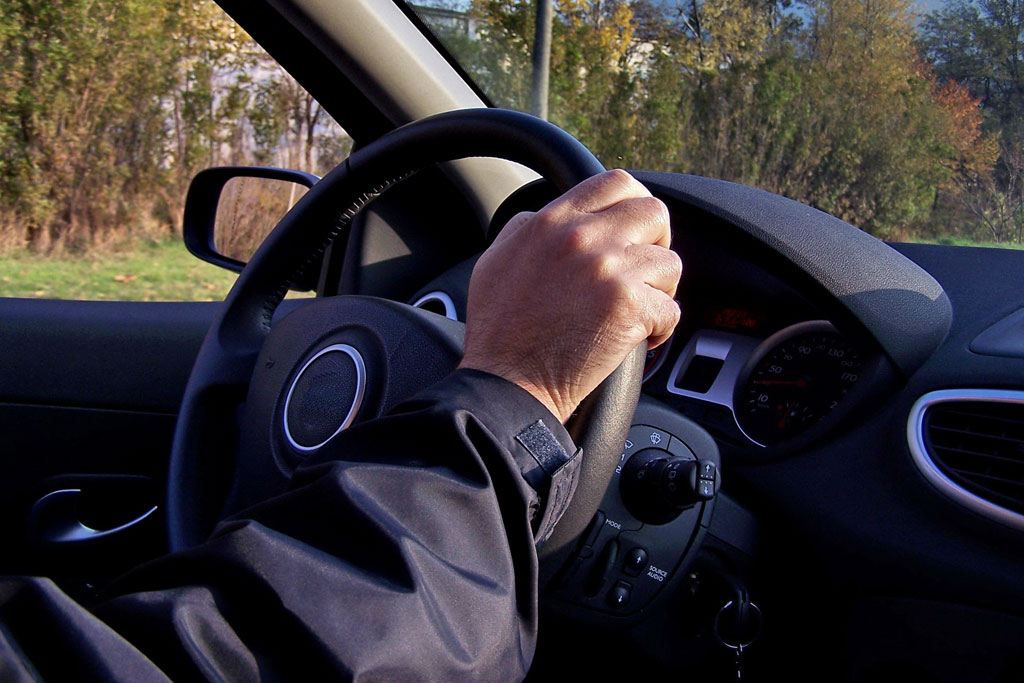
Urban Escape & Evasion Driving Tips: Father Attacked By Gang In Car!

The young husband and father was just minding his own business as he was driving home from work one night…

It was dark out – especially on the remote New Mexican desert road – and he barely noticed the car coming toward him in the opposite lane because its lights were completely off.

As a “common” courtesy, he flashed his lights to let the other drive know he needed to turn his headlights on.

Looking in his rear-view mirror, he saw the car turn his lights on.

But What Happened Next Was Completely Unexpected… And Nearly DEADLY!

The other vehicle suddenly did a split-second U-turn and began picking up speed to close in on the father’s bumper.

Veering into the opposite lane and stepping on the gas, the vehicle pulled up alongside as a passenger in the back seat thrust a handgun out the window and fired at the father who simultaneously slammed on his brakes to avoid a crash (and a bullet)!

Fortunately the other vehicle didn’t pull back around for a second shot and sped off down the remote highway.

This scenario could have spelled D.E.A.T.H. for a loving husband and father who was only trying to be an friendly driver – and is a good example of why YOU need to add “escape & evasion driving” to your survival toolbox…

This was a true story I discovered in my rough “armpit” of a town I lived in during my time in New Mexico where local gangs (we had 4 of them – and they were rough!) ruled the roads.

These gangs would initiate new members by driving around with their lights off.

The first oncoming car that flashed its lights as a “friendly heads up” would become the “target car”.

The gang would circle around and the new member’s role was to shoot at the car…

…no matter WHO was in it!

These are very real scenarios that you MUST prepare for… as well as others…

For example, what if you were:

  • Harassed on the road by a group of thugs on a drunken joy ride?
  • Being chased by a fuming driver on the highway who you mistakenly cut off and he’s trying to run you down?
  • Trapped in an urban area during civil unrest as anarchists stop cars and attack drivers?

Now “evasive driving” DOESN’T mean you have to have a fast car and go to bodyguard school.

In fact, here are 4 tips you can master right now for “escape & evasion” driving skills when you’re being chased by a car full of attackers:

1. “Speed” is not necessarily your friend

The one who survives a high speed car chase isn’t usually the fastest, it’s the one who doesn’t crash.

Watch those idiots being chased by police on shows like “Cops” and those crazy “caught on video” shows and you’ll see that all the police have to do is follow the perp until he wraps himself around a telephone pole and then put the cuffs on him.

In a chase, try not to travel over 65mph to make sure you can handle your car effectively on the turn of a dime.

2. Turn when they can’t

Rather than try to outrun someone, let them get close enough to you and then take a quick, last minute turn in a different direction.

Action is faster than reaction.

If they’re behind you, they won’t be able to respond in time to take the same turn you just did.

They’ll either crash or have to back up to follow you and by then, you’ll be long gone.

3. If on a highway, take a 4-lane exit

If you’re being chased by someone on the highway, identify an upcoming exit and move to the far LEFT lane.

With your pursuer close behind you, make sure you have clearance and at the last minute, shoot across all 4 lanes to barely make your exit.

It will be difficult for them to back up, especially in the left lane against traffic, to follow you.

4. Distract the driver

This is one of my favorite tricks…

If you’re driving at night, reach under your seat and pull out a 2- to 5,000,000 candlepower spotlight. (You can get these from any boating or auto store.)

Shine it behind you at the driver and you’ll instantly blind him.

He’ll likely stop the car out of sheer panic of crashing (which he may do).

These are just a few of the tricks you can use to escape from someone while you’re in your vehicle.

For even sneakier tactics, there’s a whole section on “survival driving” in our “urban escape and evasion” manual you can see here…

It’s loaded with tactical strategies not just for driving, but for dealing with ANY situation where you’re targeted for an attack by a group of people during collapse, riots, civil unrest, and martial law.

Unfortunately, these type of events have become more and more common… and most people have no idea how to survive these scenarios.

Don’t be one of them.

What Other Escape & Evasion Tactics Do You Have For When Driving?

Please Share Your Best Survival Tips Below Now…

The 5 Best Pocket Handguns For Self-Defence (Not only can they be concealed where other guns can’t; but any of them make a good backup piece, for those times when you might feel the situation warrants it.)

Carrying concealed can be challenging at some times. Not all clothing is conducive for hiding clothing and in some states, allowing the shape of a gun to “print through” your clothing is illegal, even if you do have a concealed carry permit. Besides that, a visible gun can give away your tactical advantage, letting the bad guys know you’re carrying.

There are two basic ways of dealing with this problem. One is to wear baggy clothing which hides the outline of a gun and the other is to carry a smaller gun. While the first option is often more favorable, there are some conditions where it isn’t practical. Wearing a suit coat to conceal a pistol is difficult when it’s 100°F outside and women’s clothing, which usually fits snugly, doesn’t leave a whole lot of room to hide much of anything, let alone the bulk of a gun.

That’s why some people turn to carrying a pocket carry handgun, a gun that’s small enough to hide in a pocket. I carried one of these for a number of years, when I first started carrying. I upgraded to something larger a number of years ago, but still have that gun. I carry it at times when carrying my normal carry gun is impossible due to the clothing I am wearing.

Using a Pocket Gun

Before buying any pocket gun, you need to understand what these guns really are. Most are smaller caliber firearms, and they all have short barrels. In other words, they clearly qualify under the old term of being “snub nose” even if they aren’t revolvers.

There’s a great line from one of W.E.B. Griffin’s books, where an experienced cop is giving advice to a rookie. After telling him to go to the shooting range with his snub nose some day, so he could see how hard it was to hit anything with it, he said, “if you can’t hit them in the head, throwing it, you can’t hit them shooting it either.” That’s a key truth that must be kept in mind when using any pocket gun.

In other words, this isn’t the gun you’re going to use to shoot someone 30 feet across a restaurant. You’re better off grabbing your Glock for that. Rather, pocket guns are “belly guns,” meaning that they’re most effective when you’re belly to belly with your adversary. Rather than aimed fire, they’re the guns used when you’re shooting instinctively, probably with the gun held at waist level; possibly even with the muzzle in contact with his belly.

Nor are you going to use this gun for a true shootout. About the only way you could use it in that case is for suppressive fire. That’s probably not something you want to do, as those poorly aimed shots can still hit someone, even if it isn’t the right person.

Finally, expect a lot more kick out of a pocket gun, than you’ll receive from a larger pistol. The small size and light weight make the recoil much worse than heftier handguns. If you don’t have a good grip on it, there’s a chance that it will come out of your hand; not something you want to have happen in the range, let alone when you have to use the gun.

With that said, here are my picks for the best.

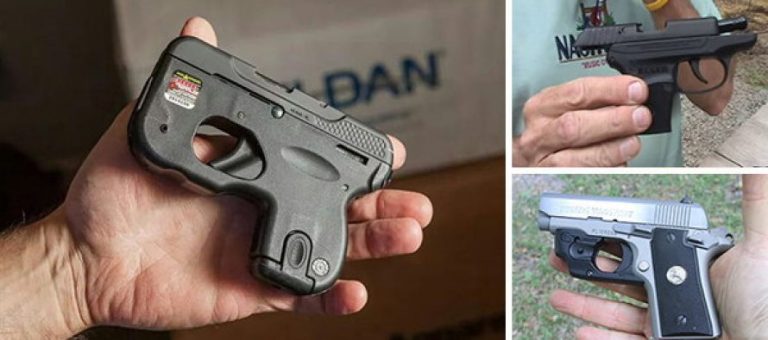
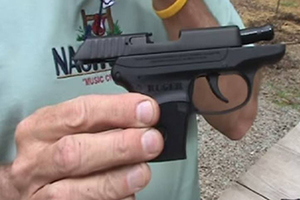
Ruger LCP

The 5 Best Pocket Handguns For Self-Defence

I had to start the list with the Ruger LCP only because it’s the pocket pistol I own. Nevertheless, it’s not just that I own one; the LCP is probably the most popular pocket pistol on the market.

It is also one of the smallest and lightest pistols around, important considerations for a pocket pistol.

While the .380 ACP isn’t an ideal caliber for a self-defense round, it’s effective at short range.

The newer LCP II eliminates the one real complaint that I had against this pistol, by improving on the sights. The original sights were hardly more than an indentation in the back of the slide, with a slight protrusion in the front. On the LCP II the sights are fully adjustable. Yet at the same time, the sights aren’t high enough to catch on anything while pulling it out of your pocket.

Bond Arms BullPup9

The 5 Best Pocket Handguns For Self-Defence

If I were in the market for a replacement for by LCP, I’d take a close look at Bond Arms’ BullPup9, overlooking its price. This is one of the few bullpup pistols on the market.

While that may not seem like much of a difference, it is when you compare the overall length and barrel length of this pistol to the others on this list.

It is actually a touch shorter than the LCP, while having a barrel that’s 0.6 inches longer.

The other nice thing about this pistol, besides its looks, is that it is a 9mm, giving it a whole lot more penetrating power than its .380 ACP cousins on this list. Even with that, they’ve managed to increase the magazine capacity, giving it 7 in the magazine and one in the throat.

Colt 380 Mustang

The 5 Best Pocket Handguns For Self-Defence

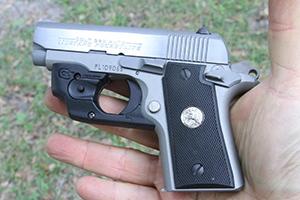
The Colt 380 Mustang is reaching a point where it’s marginal as a pocket pistol at 5.5 inches. Nevertheless, I still consider it one of the best pocket pistols around.

For 1911 enthusiasts, this compact little pistol provides the same basic design, making it extremely easy to make that switchover. I found it extremely easy to use, probably because I learned to shoot in the Army, back when the 1911 was the sidearm of our nation’s military.

This scaled-down version of the venerable 1911 comes with a polymer frame, cutting down the weight, which is important for a pocket pistol. However, this isn’t a .45 caliber, like the 1911. But I won’t hold it against it. For a pocket pistol, .380 ACP is an acceptable choice.

Heizer Defense PKO-45

The 5 Best Pocket Handguns For Self-Defence

I had to include the Heizer Defense PKO-45 on the list, because it is a .45. Being a .45 fan, as far as I’m concerned, there isn’t a better self-defense round on the market.

It was developed as the standard Army sidearm round, when they were dealing with Moro tribesman attacking them while hopped up on drugs.

I’ve always figured that if I was going to be attacked by a criminal, there was a good chance of them being on drugs, so I carry a .45.

But this is a very unique .45, the only one small enough to be called a pocket pistol. At 5 inches long, it’s the shortest pistol on our list. It also has a unique design, where the guide rod is above the barrel, allowing the barrel to remain fixed. The company claims that this makes for less recoil and I wonder if it would make the pistol more accurate as well. It’s a lot heavier than the other pistols on our list, which should help with the recoil; but it’s a .45, so that should be expected.

Taurus Curve

The 5 Best Pocket Handguns For Self-Defence

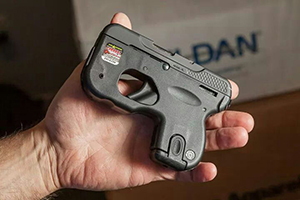
The Taurus Curve is by far the most unique firearm on this list. It is a pocket pistol that was truly designed to be a pocket pistol and nothing else.

When the folks at Taurus designed this pistol, they threw out the rule book and tried to think of what a pocket pistol needed to be.

The most distinctive aspect of this pistol is its shape, which is curved. Most shooters need some time to get used to it. But that smooth, almost aerodynamic shape makes it very easy to draw and holster the pistol, probably the biggest problem for users of any pocket pistol. It is actually curved to fit your body and has a clip to attach it to your pocket, waistband or belt. This makes the curve one of the most concealable firearms around.

I complained earlier about the sights on my LCP; well, this one doesn’t have any iron sights at all. What it does have is a line engraved and painted white on the back of the slide to help you aim, should you need it. But the real gunsight is a laser sight and tactical light, both built into the front of the gun. for the close range instinctive shooting its designed for, that’s a whole lot better.

A pocket gun is a worthy addition to anyone’s collection. While they probably won’t become the main gun in anyone’s closet, there are times when having one can be convenient. Not only can they be concealed where other guns can’t; but any of them make a good backup piece, for those times when you might feel the situation warrants it.

The Gray Man Concept, and How to be a Gray Man- In any populated area, be it sparsely or densely, there will always be elements of the humanity present that will take an interest in who sticks out.

In any populated area, be it sparsely or densely, there will always be elements of the humanity present that will take an interest in who sticks out.

Their reasons vary. They could be looking for potential prey or a person who may potentially lead them to a large score, if they are a garden-variety criminal.

They might be conducting counter-surveillance if they are engaged in organized crime, on the lookout for police or others. They might simply be desperate and destitute as a survivor looking for a way to end the misery in a post-SHTF scenario by robbing you of your supplies.

Today I’d like to share with you a 3-second survival hack you can use to skyrocket your chances of protecting your loved ones during ANY crisis.

This technique is so powerful it can give you almost superhuman powers during the ugliest nightmares imaginable….

From natural disasters like earthquakes or tornadoes…

To explosive situations like mass shootings or even nationwide martial law.

And It doesn’t matter if you’re out of shape…

Or have no equipment…

Or even if you’re disabled living in a wheelchair.

This technique has been tested and proven by elite soldiers and real world “miracle” survivors from around the world.

No matter who they are and what they are looking for, it is in your best interests, your “job,” to not look like food. To ambush and opportunistic predators alike, food stands out as lost, sick, scared, uncertain or just unfamiliar, both in countenance and behavior.

By working to blend your “target profile” with the normal and underlying appearance and tempo of a place, you can become just another antelope in the herd, and unlikely to be picked out or noticed by any potential predators. This is what is known as becoming a “gray man”:

In this article we’ll talk about the gray man concept, what a gray man is, and how to become one by making simple changes to your appearance, your lifestyle and your habits.

Table of Contents

  • What is a Gray Man?
  • Wear Appropriate Clothing
  • Be Aware of Physical Inconsistencies
  • Mind Your Scent
  • Control Your Movements
  • Adapt to Your Surroundings
  • Take Advantage of Distractions
  • Minimize Interaction
  • Getting Out of a Potentially Hostile Crowd
  • Get Rid of Old Habits
  • Don’t Play the Hero or the Villain
  • Know the Ins and Outs of Your Town or City
  • Observe People
  • Be Careful What You Post Online
  • In Summary

What is a Gray Man?

The concept of the gray man revolves around the idea of a person who does not draw attention to himself, who does not stand out from the normal inhabitants of a location in any way. A gray man can move through an area, even through a large group of people, without anyone taking special notice of him.

While it may sound like the province of airport spy novels and clandestine agency activity, this is undoubtedly useful in situations such as:

  • Martial law and state of emergency
  • Getting clear of a riot
  • Post SHTF bartering
  • Moving while carrying valuables
  • Avoiding attention from authorities or criminal elements

Some of the benefits of being a gray man include:

  • Increased chances of survival
  • Decreased chances of being targeted for robbery or surveillance
  • Decreased recognition, useful for evading pursuit and interested parties

In any cases when you are, or might be, in harm’s way, being invisible in plain sight is priceless. But, in order to “go gray”, it takes more than just a simple change of clothes.

You’ll have to truly assume the traits of a chameleon, actor and a native to complete the effect. We’ll talk about all three in the next sections.

To see what it takes to become a gray man, read our suggestions and strategies below.

Wear Appropriate Clothing

Your clothing is at least 50% of your appearance to those looking at you and will play a major role in carrying off your intent to move along undetectably.

Understanding what clothing is appropriate to an area under what context is a foundational skill for becoming invisible. This requires a nuanced understanding of your own appearance as well as people’s perceptions.

Blending in means blending in with the majority of people, not dressing in 7 shades of sepia and gray. Becoming invisible means being beneath notice, or so taken for granted most people will never consciously or unconsciously acknowledge you.

Consider for a moment any busy, densely populated area, one with considerable street and road traffic. Maybe this is a busy commercial area in your city. Think for a moment what the people look like there on a given day, at a given time, in a given season.

On a workday, around 10AM, who do you see? What are they wearing? Not many people moving around at this time on the sidewalks, is there? How about at lunchtime? Do you see more professionals hurrying out on foot to grab lunch?

How are those people dressed? Business casual or business formal? A mixture? How does the picture change on the weekend? Do people trend to dress up or dress down? Do you see plenty of sports jerseys rooting for the local favorite team(s)?

This same reasoning applies to austere environments also. If the standard wear in an area is simple, flip-flops, shorts and roughly woven shirts, you should not dress in cowboy boots, jeans and a button down shirt.

Even in a post SHTF situation, most people will probably still be dressing for comfortable mobility, whatever form that takes for them. You can expect to see a menagerie of styles.

Chances are the only people who will look like jocked-up 5.11 catalog preppers are… preppers. You don’t want to look like that. You just want to look like someone who is surviving.

Bottom Line: You may need to dress in bright colors, logo wear, business attire or something else to blend in. Anything you wear should make sense according to the normal standards and tempo of the place, time and season.

A great tool for researching this is Google Streetview as well as social media sites where users upload plenty of touristy photos.

Hop on and look at what people in the area you’ll be travelling in actually wear, and check that you are looking at different times and different days of the week.

Areas with buzzing nightlife can be sedate or nearly deserted during the day and vice versa.

Be Aware of Physical Inconsistencies

One of the things you’ll hear mentioned often in regards to being a gray man is to eliminate any obvious features that people will recall when asked to identify you or describe you. Things like tattoos, noticeable haircuts or colors, facial hair, jewelry, etc.

While there are some things you do have control over such as a bushy beard or a bright hair color, there are plenty of other things you don’t, like your height, skin color, baldness, injuries and deformities and so on.

Attempts to mitigate or conceal these things often fail spectacularly and make you more noticeable to locals and interested parties.

If you are a 6+’ white American or Englishman pootling around in rural southern or southeast Asia, there is nothing you can do that will reliably hide that fact from locals or anyone looking for you.

The same person in Norway, Germany or some other predominately white country would likely get away with being taken as a native so long as other cultural and local norms for dress, behavior and so forth were followed.

If you have a permanent feature like a tattoo, this may or may not be an issue. More people in the West have tattoos today than at any time in history. Some designs may stick out though. People pay attention to faces and hands.

Certain kinds of tattoos may inadvertently indicate status or affiliation, and in populations conditioned to be on the lookout for such things either as a social norm or for their own safety might scrutinize you more closely.

A tattoo might also make you “sticky” or easy to recall based on someone’s admiration or revulsion of the tattoo’s design/color.

If you can conceal a tattoo, you probably should, you probably should unless your advance work of the local culture reveals a preponderance of tattoos or it comes at the cost of going against the grain on dress.

Do keep in mind that, in some places and cultures, tattoos are still the exclusive realm of troublemakers, rebels, outlaws, military and so on.

Mind Your Scent

One often neglected part of your signature is your scent. This is an esoteric one, but no less important, as our sense of smell is closely tied to memory and quick to alert someone that something is out of place, even if they cannot put their finger on it.

If you are wearing expensive cologne, then you may easily get branded as a person with means which could put you in danger in some situations, or afford you safety in others.

This is not to say you want to smell bad, but you don’t want to smell good if everyone around you smells bad. More than simply good or bad, you should seek to smell like the place you belong to.

How? All kinds of things comprise your “unique” scent, and one you broadly cannot change is your own body chemistry.

But barring you have hellish halitosis or a particularly funky musk as part of your natural odor, you can modulate how you smell through a combination of eating what locals eat, using the popular local laundry detergent and wearing the common local brands of deodorant and/or cologne and perfume.

Also keep in mind that scent is useful when closely tracking someone trying to hide. Some people have fairly acute sense of smell, and it is easy to take this bit for granted if you don’t.

When you are trying to lose someone on your trail, having a strong scent, good or bad, can betray you even if you found a good hiding spot. Something to keep in mind if things go south.

To be on the safe side in that case, don’t put any products on yourself that produce a fragrance.

You might be living in one of America’s deathzones and not have a clue about it
What if that were you? What would YOU do?

In the next few minutes, I’m going to show you the U.S. Nuclear Target map, where you’ll find out if you’re living in one of America’s Deathzones.

This image has an empty alt attribute; its file name is untitled-1.png

Control Your Movements

Physical appearance is not the only thing you have to worry about. You also have to watch out for any mannerisms or body language that can be used to mark you. These may consist of a rowdy laugh or constant fidgeting.

Whatever it may be, you must learn how control your movements. You must also not project any behavior that will leave a lasting impression.

A lasting impression is made by doing something out of the norm. If you are in a place that is very reserved and conservative socially, you do not want to stick out by taking up a lot of space, being brash, noisy and generally calling attention to yourself.

In a place that is loud, boisterous and socially “animate,” being shy, meek and standing still is a recipe for getting labeled “That Guy.”

Controlling your behavior is probably one of the hardest things you can do, but do it your must. If in a crowd, match the pace and tempo of the crowd. If people in an area jaywalk, you jaywalk.

If they obey traffic and crossing signals, so do you. Changing how we act is never easy, but it can be done if you have time and patience, plus the trick I’m about to teach you.

This trick is a mental exercise called the observing ego. This is more or less your ability to see yourself from above, acting in real time, and allowing yourself to control your movements and reactions independently of what you might feel.

So if you’re in on the bus, with 20 people around you, instead of curiously looking around at each of them, trying to notice if they’re good or bad (while pretending you’re in an SHTF situation, of course), you could develop the strength to do it more discreetly, by visualizing exactly how you should do it from above, via your observing ego.

It’s easier said than done, I know, but it works – and that’s all that matters.

Adapt to Your Surroundings

The way you are perceived is not a fixed formula or recipe, but a constantly shifting lens.

The same attire and mode of behavior in the middle of a larger city’s financial district will see you blend in effortlessly with the tens of thousands of office drones and cubicle commandos going about their day will see you stand out like a neon sign in a small village an hour outside of the city limits.

If you get caught “out of character”, either by accident or mishap, you should adapt to this new setting with some cover for action, not try to shoehorn your existing dress and behavior to the new environment.

For instance, using our example above a city slicker in a small town attracting attention could play it off as just passing through, or heading to a see a relative.

Do take care with any “white” lies though, as it is easy to get caught out without cover is someone asks you follow up questions that you don’t have good answers for.

When moving to places like these, you have to learn how to dress and act like a local. Choose cities that will be easier for you to study and imitate the people. Few things arouse more suspicion than a stranger in town…

Take Advantage of Distractions

All kinds of things can provide cover for movement, noise and behavior. Any loud music or other activity can easily screen noise from breaking and entering, fighting, or some other noisy action.

Anything that happens to send people running or moving around erratically will cover you from running or moving quickly.

An event that is literally holding the eyes of a crowd will make it a cinch for you to move through the mass of people without attracting their attention, but you should always be cautious of those who are watching the crowd itself; your movement against the group will be highly conspicuous in that case.

Minimize Interaction

If don’t want to be seen, then you must definitely avoid talking with people other than what’s necessary. Sure, small talk every now and then won’t hurt but be careful not become a presence in other people’s lives.

When living in an area for a long time, this may be impossible, as the same people will begin to notice you, or you might have dealings with them, repeatedly.

In such a case, do your best to fit the profile of friendly, but not particularly remarkable.

Be especially wary of conversing with or near any gatekeepers, meaning security, bouncers, receptionists, tollbooth operators and ticket-takers, etc.

Anyone who has a vested interest in keeping the wrong people out as part of their job is likely to pick up on what is out of place quicker than the average person.

Safe people to talk to include those in the service industry in any way- barbers, quickie mart workers, waitresses, etc.- as small talk is just a part of their day. These people can also be gold mines of intel on what is happening locally, as well as who the major players are in any conflicts.

Don’t go bragging about your prep and survival skills or divulge any personal details that can identify you. Because if you do and SHTF, these people will come looking for you. In short, steer away from interactions that can leave a lasting impression.

Whatever you do, don’t go bragging about your prep and survival skills or divulge any personal details that can identify you. Because if you do, it is possible people will come looking for you.

Loose lips sink ships, you know. In short, steer away from interactions that can leave the wrong kind of lasting impression.

Also take great care to avoid areas where agitator tribal groups are active. What is a tribal group? Any group that actively filters who is in, and who is out as far as the group is concerned.

Places of protest, places with known gang activity, and politically motivated hangout spots are great places to get “interrogated” (maybe really interrogated!) and punished if you give the wrong answers. At best, such encounters will only raise your profile.

One good trick to minimize interaction is to wear earphones. In today’s times, this is the universal “busy” signal, indicating you are checked out as far as human beings are concerned.

This will decrease the possibility of other people trying to talk to you – in peacetime and in permissive environments at least.

Take care that you position the earphones in such a way that you can still actually hear what is happening around you- mind your situational awareness!at least.

Getting Out of a Potentially Hostile Crowd

If you’re trapped in a protest or a riot, the best and only thing you should do is get out. It doesn’t matter if you support the cause, you’re a prepper and your mission is to survive.

Rule #1 is to never go against the crowd. Try to move with the crowd, but at an angle, so you slowly get to the edge of the group. Don’t move faster than the crowd even if you see a window of opportunity to get out; this might appear suspicious.

Rule #2 is you believe what the crowd believes. Chant along, look suitably angry, and gesticulate as they do. Take care that you get clear before police reprisals or opposition lock horns with the group you are in.

Rule #3 is to quickly adopt any “battle flags”. If this is a cloth or bandana over the mouth, you wear the same. If it is a colored armband, try to come up with one, or something close. If you can quickly ascertain who the “opposition” is, don’t look like them no matter what!

As soon as you can break off and get clear as quickly as possible. Riots and unruly protests are dangerous no matter whose side you are on and where you get caught up in them.

Get Rid of Old Habits

If you get your morning coffee from the local shop or have brunch every Sunday in your favorite deli, then being a patron will certainly not make you invisible.

You may be easily recognized by your routine and become predictable in your daily movement. If you want to become harder to track, eliminate vulnerable consistency in your life and don’t visit places regularly enough to make you a familiar face.

At the least, take different routes to and from your usual haunts, including your home, and time your comings, visits and goings so that you cannot be surely timed.

Almost everyone has at least a few known locations we’ll be tied to- work and home- but everything in between and our routes and itineraries to get to those places can and should vary!

When you walk, especially from home, don’t always take the same route. Change it a little bit. Go faster or slower. Take entirely new or roundabout ways coming and going. This will also help you familiarize yourself with the different ways to get home, or to bug out.

Don’t Play the Hero or the Villain

In survival situations, being too friendly might do you more harm than good. The same goes for being rude. In terms of behavior, people tend to remember those who helped them carry a bag of groceries and those who shoved past them without so much as an apology.

In cases like these, avoid being on either side of the spectrum. Be the person in the middle; be empathetic without being too nice.

This might also mean that if you see someone being abused, you might need to stay away. This is a decision you’ll need to make ahead of time lest you react rashly and make a bad situation worse.

I say this with all sincerity: have that quiet heart to heart with yourself now. Go deep. If it isn’t hurting, if it isn’t gut-wrenching, it probably isn’t sincere enough.

You must know what your limits are, what you are willing to ignore, and what you cannot ignore in your effort to survive, if not for you and yours then only for yourself.

If it’s one poor gal and four thugs, trying to help her could not only result in failure, you yourself could get hurt or killed.

If you’ve read some of Sven Hassel’s novels such as Comrades of War, you probably noticed nasty situations were daily life during the 2nd World War, even among people on the same side of the war.

I highly recommend you read some of his books to get your mid accustomed to what things might be like in a post-apocalyptic society.

Know the Ins and Outs of Your Town or City

The best way to stay out of trouble around people is to avoid concentrations of people, i.e. not to go near the cities. If you must go, you must have extensive knowledge of the city and its roads.

Know which areas are safe, or safer, and which ones definitely aren’t. You must also be able to locate the nearest resources such as hospitals, police stations, gas stations, convenience stores, etc.

When entering a building, always take note of the nearest exits. It is always helpful to leave via a different exit, even when there is no emergency.

If you take time to map out the city, you’ll be better able to find your escape route when you find yourself in the middle of a chase. Better safe than sorry.

Observe People

Mastering the art of disappearing is no easy task. As an exercise, try to look and study people when going out in public.

Take note of the people that catch your attention and determine which characteristics which made you notice them. Really drill down into what caught your attention and in what context.

By identifying the stimulus, you have an idea of the things you need to avoid in your own behavior. In addition, scan the crowd to see if you can spot a gray man. Pay attention and identify the traits that make him inconspicuous and try to emulate him.

Learn to use your peripheral vision to observe people and things. This takes practice but it’s a pretty easy survival skill to learn, and it’s actually pretty fun!

Believe it or not this is a skill you can practice and improve upon. It pays sometimes to observe without appearing to observe what is happening around you.

If this is too challenging, or your peripheral vision sucks, you can wear sunglasses in an appropriate setting.

Be Careful What You Post Online

You may be a pro in being anonymous in public, but this may be to no avail if you don’t practice the same techniques online.

Any information you post on the internet, like announcing a holiday trip overseas, provides an opportunity for others to break into your home.

Anything you post at all can be used in social engineering to hurt you, so be mindful of posting anything, anything, on the internet.

Your personal details may also be used for online theft. There are a lot of opportunists and hackers who take advantage of information people carelessly give away online.

Don’t be a victim, and protect your online identity, as someone might use precious bits of information about you post SHTF.

In Summary

Being a gray man will require a lot of practice and patience on your part. You will also need to do some work to understand human behavior, perception and reactions.

The things that may or may not make you stand out in one place could be completely innocuous in another.

The fact of the matter is, the world is a dangerous place and there are people out there, right now, waiting for the right sucker to come along. If you don’t anticipate danger and plan ahead, you’ll lose.

When calamity strikes, there may not be any cops to enforce the law and you will have to take matters into your own hands to protect yourself and your family. It sounds extreme, but it never hurts to prepare.

The first step to avoiding trouble to keep off trouble’s radar, and you’ll make that happen by employing gray man techniques and mindset.

So, what are some of the things you’re doing to become a grey man. IN addition to the mindset and the general way of being we talked about, there are dozens of specific things you can do to go unnoticed.

We gathered no less than 50 of them, but do let the Survival Sullivan community know of any others you may be employing.

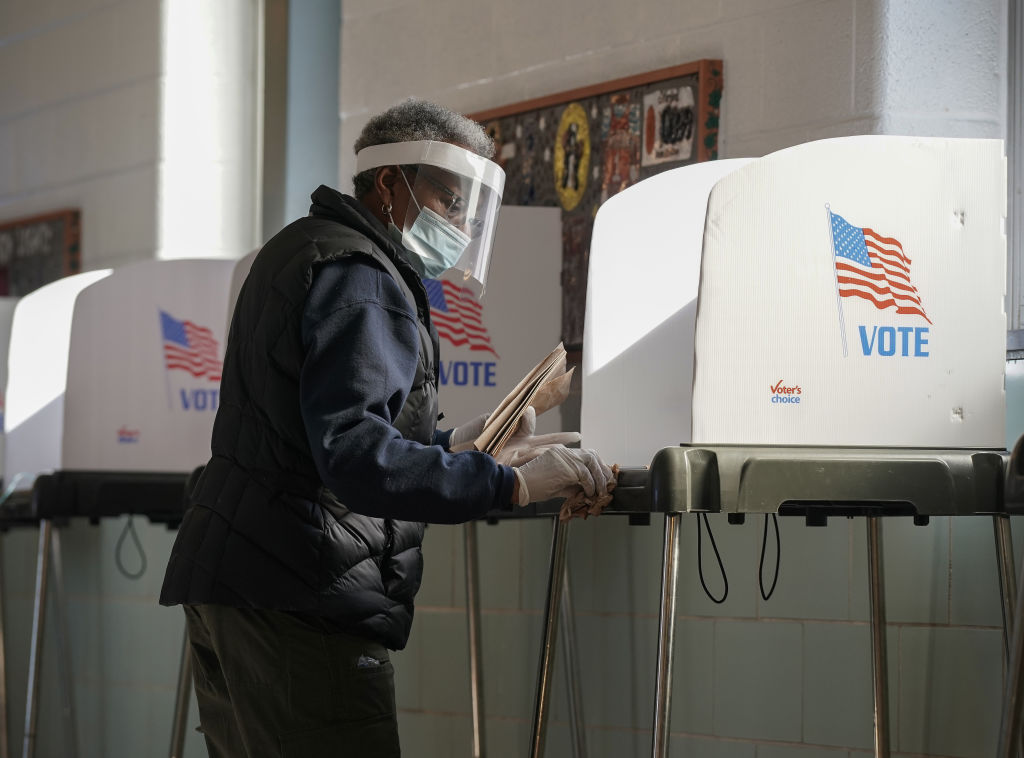
72 Types Of Americans That Are Considered “Potential Terrorists” In Official Government Documents- You can now be considered a “potential terrorist” just because of your religious or political beliefs.

Are you a conservative, a libertarian, a Christian or a gun owner?  Are you opposed to abortion, globalism, Communism, illegal immigration, the United Nations or the New World Order?  Do you believe in conspiracy theories, do you believe that we are living in the “end times”?

If you answered yes to any of those questions, you are a “potential terrorist” according to official U.S. government documents.

At one time, the term “terrorist” was used very narrowly. The official definition of terrorism is “The use, or threat, of force with the intention of achieving a political goal.” That makes it pretty clear what sort of people are covered, and for decades it worked well.  The government applied the label “terrorist” to people like Osama bin Laden and other Islamic jihadists.  But the Obama administration removed all references to Islam from terror training materials, and instead the term “terrorist” was applied to large groups of American citizens.

And if you are a “terrorist”, that means that you have no rights and the government can treat you just like it treats the terrorists that were being held at Guantanamo Bay.  So if you belong to a group of people that is now being referred to as “potential terrorists”, please don’t take it as a joke.  The first step to persecuting any group of people is to demonize them.  And right now large groups of peaceful, law-abiding citizens are being ruthlessly demonized.

Today I’d like to share with you a 3-second survival hack you can use to skyrocket your chances of protecting your loved ones during ANY crisis.

This technique is so powerful it can give you almost superhuman powers during the ugliest nightmares imaginable….

From natural disasters like earthquakes or tornadoes…

To explosive situations like mass shootings or even nationwide martial law.

And It doesn’t matter if you’re out of shape…

Or have no equipment…

Or even if you’re disabled living in a wheelchair.

This technique has been tested and proven by elite soldiers and real world “miracle” survivors from around the world.

Below is a list of 72 types of Americans that are considered to be “extremists” and “potential terrorists” in official U.S. government documents.  To see the original source document for each point, just click on the link.  As you can see, this list covers most of the country…

1. “Those that talk about “individual liberties”
2. “Those that advocate for states’ rights
3. “Those that want “to make the world a better place”
4. “The colonists who sought to free themselves from British rule”
5. Those that are interested in “defeating the Communists”
6. Those that believe “that the interests of one’s own nation are separate from the interests of other nations or the common interest of all nations”
7. Anyone that holds a “political ideology that considers the state to be unnecessary, harmful,or undesirable”
8. Anyone that possesses an “intolerance toward other religions”
9. Those that “take action to fight against the exploitation of the environment and/or animals”10. “Anti-Gay”
11. “Anti-Immigrant”
12. “Anti-Muslim”
13. “The Patriot Movement”
14. “Opposition to equal rights for gays and lesbians”
15. Members of the Family Research Council
16. Members of the American Family Association
17. Those that believe that Mexico, Canada and the United States “are secretly planning to merge into a European Union-like entity that will be known as the ‘North American Union”
18. Members of the American Border Patrol/American Patrol
19. Members of the Federation for American Immigration Reform
20. Members of the Tennessee Freedom Coalition
21. Members of the Christian Action Network
22. Anyone that is “opposed to the New World Order”
23. Anyone that is engaged in “conspiracy theorizing”
24. Anyone that is opposed to Agenda 21
25. Anyone that is concerned about FEMA camps
26. Anyone that “fears impending gun control or weapons confiscations”
27. The militia movement
28. The sovereign citizen movement
29. Those that “don’t think they should have to pay taxes”
30. Anyone that “complains about bias”
31. Anyone that “believes in government conspiracies to the point of paranoia”
32. Anyone that “is frustrated with mainstream ideologies”
33. Anyone that “visits extremist websites/blogs” 
34. Anyone that “establishes website/blog to display extremist views”
35. Anyone that “attends rallies for extremist causes”
36. Anyone that “exhibits extreme religious intolerance”
37. Anyone that “is personally connected with a grievance”
38. Anyone that “suddenly acquires weapons”
39. Anyone that “organizes protests inspired by extremist ideology”
40. “Militia or unorganized militia”
41. “General right-wing extremist”
42. Citizens that have “bumper stickers” that are patriotic or anti-U.N.
43. Those that refer to an “Army of God”
44. Those that are “fiercely nationalistic (as opposed to universal and international in orientation)”
45. Those that are “anti-global”
46. Those that are “suspicious of centralized federal authority”
47. Those that are “reverent of individual liberty”
48. Those that “believe in conspiracy theories”
49. Those that have “a belief that one’s personal and/or national ‘way of life’ is under attack”


50. Those that possess “a belief in the need to be prepared for an attack either by participating in paramilitary preparations and training or survivalism”
51. Those that would “impose strict religious tenets or laws on society (fundamentalists)”
52. Those that would “insert religion into the political sphere”
53. Anyone that would “seek to politicize religion”
54. Those that have “supported political movements for autonomy”
55. Anyone that is “anti-abortion”
56. Anyone that is “anti-Catholic”
57. Anyone that is “anti-nuclear”
58. “Rightwing extremists”
59. “Returning veterans”
60. Those concerned about “illegal immigration”
61. Those that “believe in the right to bear arms”
62. Anyone that is engaged in “ammunition stockpiling”
63. Anyone that exhibits “fear of Communist regimes”
64. “Anti-abortion activists”
65. Those that are against illegal immigration
66. Those that talk about “the New World Order” in a “derogatory” manner
67. Those that have a negative view of the United Nations
68. Those that are opposed “to the collection of federal income taxes”
69. Those that supported former presidential candidates Ron Paul, Chuck Baldwin and Bob Barr
70. Those that display the Gadsden Flag (“Don’t Tread On Me”)
71. Those that believe in “end times” prophecies
72. Evangelical Christians

The groups of people in the list above are considered “problems” that need to be dealt with.  In some of the documents referenced above, members of the military are specifically warned not to have anything to do with such groups.

We are moving into a very dangerous time in American history.  You can now be considered a “potential terrorist” just because of your religious or political beliefs.  Free speech is becoming a thing of the past, and we are rapidly becoming an Orwellian society that is the exact opposite of what our founding fathers intended.

You might be living in one of America’s deathzones and not have a clue about it
What if that were you? What would YOU do?

In the next few minutes, I’m going to show you the U.S. Nuclear Target map, where you’ll find out if you’re living in one of America’s Deathzones.

This image has an empty alt attribute; its file name is untitled-1.png
Design a site like this with WordPress.com
Get started