5 innovative water harvesting techniques for dry, off-grid areas

Clean water is a scarce resource in dry, off-grid environments. In these areas, conventional water sources such as snowfall, rainfall, river runoff and groundwater are rare if not completely absent. But innovative water sourcing methods could help address that scarcity.

In an article for the Conversation, environmental scientists Manzoor Qadir and Vladimir Smakhtin, both from United Nations University in Japan, detailed five water harvesting techniques that tap into unconventional water sources such as fog and saltwater. These techniques require advanced technologies but could help meet water demand in arid and remote regions.

Fog collection

Dry areas that regularly experience intense fog, such as mountainous and coastal regions, can harvest water droplets embedded in the vapor. According to Qadir and Smakhtin, fog can be collected using a vertical mesh that captures water droplets from passing fog. Those droplets then drip into a water collection, storage and distribution system.

Fog collection systems offer the benefit of being clean and low-maintenance. With technical support from local institutions, local communities can easily run these systems by themselves. Countries that use this technique include Chile, Israel, Oman and Eritrea.

During a SHTF situation, pain could become an annoyance for some, but unbearable for others.

If doctors are scarce and medicine becomes even scarcer, this one little weed, found all over North America and similar to morphine, could be a saving grace.

Minimizing evaporation

Micro-catchment rainwater harvesting is meant to minimize evaporation, or the process of turning liquid into vapor. This method captures rainwater on the ground where it would otherwise evaporate.

There are two major types of micro-catchment rainwater harvesting systems. One is water harvesting through rooftop systems, in which runoff is collected and stored in tanks or other similar containers. The collected water can be used at home or for livestock.

The second is water harvesting for agriculture, which involves collecting runoff that pools in a small reservoir or in the root zone of a cultivated area. The catchment surface may be natural or covered with a material that prevents the soil from absorbing water.

Desalination

Desalination removes salt from seawater to make it drinkable. This allows for the collection of water beyond what is available from the water cycle and provides a steady water supply that is independent of the climate.

Many places now obtain their water partly from desalinated seawater. California, for example, has 11 desalination plants and 10 more proposed for construction. Arid regions around the world like the Middle East and North Africa also obtain their water supply from the sea.

At present, desalination provides around 10 percent of the municipal water supply of urban coastal centers worldwide. By 2030, this is expected to reach 25 percent.

Qadir and Smakhtin noted that more places will become reliant on desalinated water due to the technique’s declining costs and, on the other hand, the rising costs of conventional water resources. Indeed, technological advances are expected to cause a significant decrease in production costs by 2030.

Iceberg harvesting

Icebergs may float on seawater but they are actually made of freshwater. But despite their potential as a clean water source, harvesting icebergs is not exactly easy. It requires locating a suitable source, calculating the necessary towing power requirements, predicting melting rates in transit and estimating the economic feasibility of the entire process.

Scientists are currently working to efficiently harvest icebergs from the poles. Countries such as the United Arab Emirates and South Africa also expressed interest in towing icebergs to narrow gaps in their water demand and supply.

Cloud seeding

Cloud seeding has been used before to increase the amount of rainfall. This technique increases the likelihood of precipitation by dispersing small particles into the sky that promote raindrop or ice crystal formation.

According to Qadir and Smakhtin, only up to 10 percent of the total cloud water content gets released spontaneously to the ground as precipitation. Cloud seeding can bring that up by 20 percent depending on factors such as cloud type, cloud water content and base temperature.

With many places worldwide lacking conventional water sources, it’s important to explore new water harvesting options that tap into unconventional water resources like icebergs and fog to provide adequate water supplies to arid, off-grid communities.

Are you ready to survive in the major crisis?

Alive After the Fall – How to Survive an EMP/HEMP Attack on the Power Grid this guide is a complete program that gives you not only great strategies to survive catastrophes, nuclear and chemical attacks.

But also, to help you be a step ahead of the global enemy, understand political and social signs, and never be caught off-guard.

Why Did States Sign NPT Treaty As Non-Nuclear Weapon States

Following the inception of the “Treaty on the non-proliferation of nuclear weapons NPT” in 1967, about 186 states signed NPT as non-nuclear weapon states (NNWS) which are obliged to refrain from acquiring or manufacturing nuclear weapons nor these states are allowed to seek or receive assistance from nuclear weapon states in this regard, and have to comply with the prerequisites defined by IAEA. The reasons due to which these states decided to give up their sovereign right of acquiring nuclear weapons (despite the fact that some of these states are actually capable to develop nuclear weapons) are driven by motivations that vary according to the states’ regional and domestic security dynamics, combined with the international normative values. Hence, in order to identify and understand the relevant reasons, case studies and an analysis have been presented.

CASE STUDIES

UKRAINE: After exploring the official statements related to the nuclear policy, issued by Ukraine’s Ministry of Foreign Affairs (MFA), following reasons were observed due to which Ukraine signed NPT: international pressure, technical incapability, unstable economic affairs, incentive given by NPT in terms of civil nuclear technology (membership of MCTR “Missile Technology Control Regime” saved the space industry of Ukraine), pursuit for the stability of the newly established state in the region etc. At first, Ukraine tried to hold the rights over a nuclear arsenal (that it inherited after the disintegration of USSR). However, it seemed unable to handle international pressure. Moreover, MFA of Ukraine acknoweldged that Ukrain didn’t want to offend the IAEA prerequisites as doing so would result in unstable economic relations with other states, especially Russia; the halted supply of nuclear fuel from Russia would cause the Ukranian nuclear power plants to shut down which might have result in energy crisis.

EGYPT:Previously interested in the procurement of nuclear weapons (due to perceived threat from “nuclear activity of Israel”), Egypt signed NPT in 1981 as it perceived (constructivism) that the benefits of signing NPT were impeccable in terms of diplomatic ties with US and aid of approximately two billion dollars provided by US every year. Moreover, Egypt had the chance to be “good international citizen” as per the international norms and to criticize the Israel’s ambigous nuclear aims.

BRAZIL AND ARGENTINA: Brazil and Argentina faced security dilemma due to the “long-standing rivalry” between them. Later on, due to the adoption of the “democratic regimes”, their rivalry was mitigated. Later on, Argentina and Brazil states became party to the NPT as NNWS in the years 1995 and 1998 respectively. Hence, the security dilemma was over and these states, being democratic states and as per the international normative values, had no reason to stay out of NPT. So the “low security threat” is the main reason due to which these states signed NPT as NNWS.

SOUTH KOREA:Despite having the advanced nuclear reactors manufacturing industry, South Korea chose to sign NPT as NNWS, partly because of its capitalist approach and international norms, and partly because of nuclear umbrella sought by South Korea from USA (though the influence of extended nuclear deterrence remains debatable between scholars).Moreover,according to some scholars, a few states are able to develop and manufacture the final product (nuclear weapons) but have not done it yet, either due to diplomatic reasons or simply because they do not have the reason to rush towards the development of nuclear weapons as they can manufacture nukes any time by withdrawing from NPT in case they perceived potential threat. However, the personal opinion is that it is highly unlikely of South Korea to withdraw from NPT.

JAPAN:Japan signed NPT as NNWS due to the international condemnation it faced which resulted from its aggressive historical background, and due to article 9 (renounced its right to keep armed forces except for defensive purposes) in its constitution. Moreover, like South Korea it has nuclear umbrella from US. However, scholars debate over the future of Japan (Whether it would remain non-nuclear state or not).

ANALYSIS

Although, multiple scholars gave multiple sets of “proliferation motives” yet an attempt has been made in this article to identify the most relevant motives and reasons due to which states signed NPT as NNWS, after studying the cases of the few states ( elaborated above).

First of all, The expense of the enrichment of fissile material (uranium or plutonium) and the development of stable nuclear arsenals, could be a disincentive for developing states to procure nuclear weapons. Therefore, such states might have signed NPT in order to be benefited by prohibitive international laws (for the use of force) in terms of security.

Second reason is theRegional Security Dynamics; whether a state is facing security dilemma with its adversary or not. If a state is not facing any security dilemma then there is no reason for the state to stay out of NPT. Otherwise, procurement of nuclear weapons would pose potential threat to the security of the state as compared to the disarmament. The initiative for the development of nuclear weapons taken by a state would insecure its adversary and may lead to arms race in the region that would ultimately, contribute to the instability of that region. Another reason could be drived from the perceived “Nuclear Umbrella”; state such as South Korea and Japan may not develop nuclear weapons as in case of conflict, they would seek help, in the form of the deployment of nuclear weapons, from the USA; a phenomeon known as extended deterrence.

Thirdly, International Normative values based contructivism could also be considered a reason due to which states signed NPT as NNWS. The term nuclear taboo became the part of the scholarly text which emphasized the constructivist perception that the making and the use of nuclear weapons is immoral and the (perceived) legitimate initiatives related to he non-proliferation and disarmament would increase their prestige (which might also be beneficial for inter-state relations of a state with others and for the trade). This norm has been institutionalized in Non-proliferation Treaty. In other words, “states prefer to be good international citizens; the ones which do not develop nuclear weapons” (Jacques Hymans). Hence, the states overwhelmed (international pressure) by the international norms signed NPT as non-nuclear weapon states. Many states (which possessed the capability of developing nuclear weapons) started nuclear programs before NPT entered into force. Later on, these states terminated their nuclear programs and signed NPT due to the altered norms of cost and benefit analysis; favorable trade agreements and the changed definition of appropriate state behavior. Another factor that contributes to this topic is the history of the states (e.g Japan’ case).

Fourthly,the behavior of the states influenced by intra-state political and economic affairs could also be a reason; political structure and type of government along with the state’s priorities (military security prioritized over economic security and vice versa). Democratic states tend to be the protagonist of NPT and prefer to obey the international laws (However, this opinion remains debatable). Moreover, the “willingness” of the state leaders to prefer the economic growth (through international trade and cooperation; a liberal perspective) could also be a “non-proliferation motive”, since doing otherwise (prefering to develop nuclear weapons) would result in economic sanctions and disintergration.

Fifth reason is the most common and widely understood reason that is the incentive (bargain) offered by NPT to the non-nuclear weapons states; the providence of civil nuclear technology for the peaceful purposes (e.g generating electricity or for medical purposes etc.).

Other reasons have also been assumed after observing the state of world affairs, for example: the monopoly of P5, that is, not to let other states acquire nuclear weapons could also be the reason; the small weak states or the states that are newly established may have signed NPT after being pressurized by these countries on political and economical level. Moreover,some states might have signed NPT to simply support the cause of this treaty. For example, New Zealand signed NPT because it is a great protagonist of the non-proliferation and disarmament cause. In addition to that, these states, at the time of signing the treaty, expected P5 to disarm as per the treaty’s articles. The matter that the P5 haven’t done it yet, has been raised at NPT meetings many times, by NNWS.

CONCLUSION

Since there are 186 states party to the NPT as Non-Nuclear Weapon States (NNWS), the reasons for them signing as NNWS are numerous. However these reasons could be narrowed down to the few major reasons; security dynamics of the regions where these states are situated, their intra-state matters, the prevailing norms in the international system, cost and beneft analysis over the incentives offered by NPT etc. However, the effect of NPT is uncertain since the states that have signed NPT do not have immediate security threats. In case, they face threats from adversary, the decisive role of NPT over such potential security issues remains debatable.

Deepfake Detectors Can Be Defeated, Computer Scientists Show For The First Time [Video]

Systems designed to detect deepfakes –videos that manipulate real-life footage via artificial intelligence–can be deceived, computer scientists showed for the first time at the WACV 2021 conference which took place online Jan. 5 to 9, 2021.


Researchers showed detectors can be defeated by inserting inputs called adversarial examples into every video frame. The adversarial examples are slightly manipulated inputs which cause artificial intelligence systems such as machine learning models to make a mistake. In addition, the team showed that the attack still works after videos are compressed.

******

Here is a bit of History inserted by The Liberty Beacon Editors…

******

“Our work shows that attacks on deepfake detectors could be a real-world threat,” said Shehzeen Hussain, a UC San Diego computer engineering Ph.D. student and first co-author on the WACV paper. “More alarmingly, we demonstrate that it’s possible to craft robust adversarial deepfakes in even when an adversary may not be aware of the inner workings of the machine learning model used by the detector.”

In deepfakes, a subject’s face is modified in order to create convincingly realistic footage of events that never actually happened. As a result, typical deepfake detectors focus on the face in videos: first tracking it and then passing on the cropped face data to a neural network that determines whether it is real or fake. For example, eye blinking is not reproduced well in deepfakes, so detectors focus on eye movements as one way to make that determination. State-of-the-art Deepfake detectors rely on machine learning models for identifying fake videos.

The extensive spread of fake videos through social media platforms has raised significant concerns worldwide, particularly hampering the credibility of digital media, the researchers point out. “If the attackers have some knowledge of the detection system, they can design inputs to target the blind spots of the detector and bypass it,” said Paarth Neekhara, the paper’s other first coauthor and a UC San Diego computer science student.  [Watch….]

Researchers created an adversarial example for every face in a video frame. But while standard operations such as compressing and resizing video usually remove adversarial examples from an image, these examples are built to withstand these processes. The attack algorithm does this by estimating over a set of input transformations how the model ranks images as real or fake. From there, it uses this estimation to transform images in such a way that the adversarial image remains effective even after compression and decompression.

The modified version of the face is then inserted in all the video frames. The process is then repeated for all frames in the video to create a deepfake video. The attack can also be applied on detectors that operate on entire video frames as opposed to just face crops.

The team declined to release their code so it wouldn’t be used by hostile parties.

High success rate

Researchers tested their attacks in two scenarios: one where the attackers have complete access to the detector model, including the face extraction pipeline and the architecture and parameters of the classification model; and one where attackers can only query the machine learning model to figure out the probabilities of a frame being classified as real or fake. In the first scenario, the attack’s success rate is above 99 percent for uncompressed videos. For compressed videos, it was 84.96 percent. In the second scenario, the success rate was 86.43 percent for uncompressed and 78.33 percent for compressed videos. This is the first work which demonstrates successful attacks on state-of-the-art deepfake detectors.

“To use these deepfake detectors in practice, we argue that it is essential to evaluate them against an adaptive adversary who is aware of these defenses and is intentionally trying to foil these defenses,” the researchers write. “We show that the current state of the art methods for deepfake detection can be easily bypassed if the adversary has complete or even partial knowledge of the detector.”

To improve detectors, researchers recommend an approach similar to what is known as adversarial training: during training, an adaptive adversary continues to generate new deepfakes that can bypass the current state of the art detector; and the detector continues improving in order to detect the new deepfakes.

The Great Depression Was One Of The Most Traumatic Events In American History: 50 Tips From The Great Depression

The Great Depression was one of the most traumatic events in American history. Following the stock market crash of October 1929, industrial production crashed, construction shrank to a fraction of what it had been and millions of people found themselves on short hours or without work. Until the economy picked up again in 1935 life was a real struggle for the average American.

To get through the economic collapse and the grinding poverty that followed it, people had to adapt and learn new skills – or re-learn old ones. For that reason, many people who lived through it looked back with a sense of, maybe not exactly nostalgia, but pride in how they managed to cope.

A lot of the things people did during the Great Depression still make a lot of sense today. With our own economy looking vulnerable, and the risk of a new collapse always lurking just around the corner, would we cope as well as our grandparents and great-grandparents did? Here are some of the ways they took care of themselves and those around them through some of the hardest times the USA has ever seen.

Work

  1. Entire families moved in search of work. By staying together, they could support each other while not missing employment opportunities.
  2. Migrant farm work was a life-saver for many. Different crops needed harvesting at different times, so it was – and still is – possible to find several months’ work.
  3. People were willing to try any job. They didn’t ask “Do you have any work for a…?” But, “Do you have any work?” They were flexible because they had to be.
  4. Everyone in a family was prepared to earn money. Kids could make a valuable contribution too. Families worked for a common goal – earning enough to survive.
  5. great depression1Almost anything had some value. Driftwood collected from the beach could be split and sold as firewood. Most any kind of metal can be collected and sold as scrap.
  6. Government “New Deal” employment programs provided jobs and taught skills. They also created a lot of new infrastructure, including many roads – and the Hoover Dam.
  7. There was no such thing as retirement age. Anyone who could work did When money is tight, everyone needs to contribute whatever they can earn.
  8. A lot of jobs became part-time as employers tried to save money. Many people worked several part-time jobs, often putting in very long days.
  9. Many of the jobless spent all day going round employers, looking for any work they could find. Even an hour or two’s labor would make a difference.
  10. People created jobs for themselves. Some women would wake early to cook dozens of meals, then sell them outside factories and construction sites.
  11. Flexibility helped. Someone who knew a little about several trades had a better chance of finding work than someone who was an expert at one.
  12. Farmers would take on workers they didn’t have the money to hire, and pay them in produce instead.

Housing

  1. Many people lost their homes. Often, extended families – grandparents, aunts, uncles – ended up living in one house.
  2. Others were forced to live in their car or truck, buying cheap meals and washing at public gyms or swimming pools.
  3. homseThe homeless often lived in tents – or shack or lean-tos they’d built themselves. Having a place to live, even a basic one, was better than sleeping rough.
  4. To save energy, walls were insulated with anything that would help keep heat in through the winter – mud, newspapers or tar paper. It all helped cut fuel costs.
  5. Homes were kept cooler than normal. Wearing more clothes indoors reduced the need to burn fuel, and that left more money for food.
  6. In summer people hung wet sheets over doorways and windows. As the water evaporated it drew in heat from the air, cooling the home slightly.
  7. Refinancing a home was one way to keep up the payments – and it could also free up cash for living expenses.

Money

  1. moneyLife insurance policies were a safety net for those who had them. If money ran out the policy could be cashed in, helping keep the family afloat for a few more months.
  2. Many people rarely saw cash; barter economies quickly grew up. Small jobs might be paid with milk, fresh vegetables or fruit, especially in rural areas.
  3. With millions out of work, begging was common – and seen as desperation, not antisocial behavior. Outside restaurant was a favorite spot; only the rich could afford to eat there.
  4. People respected banks back then, but when banks started closing the trust soon faded. Nobody knew when their own might shut, so the wise kept cash at home.
  5. Many stores gave credit and let regular payments slide. They just kept track of what was owed and hoped it would be paid someday. Many stores went bankrupt because of this.

Food

  1. Having a vegetable plot made a huge difference. In 1929, 20% of Americans still lived on farms; most of the rest had big gardens, and the skills to grow their own food.
  2. Hunting and fishing were major sources of protein. Meat was expensive, but if you could harvest your own you had a better diet. Surplus was great for barter, too.
  3. Foraging was also popular. Nuts, berries, and wild greens helped put meals on the table, and kids and older people could forage as well as anyone.
  4. In the country, canning was an essential skill. A well-stocked pantry was both a source of pride and a life-saving reserve for the winter.
  5. foodPeople learned that you can eat almost anything if you’re hungry enough. Tumbleweed was used as fodder for cattle; then people found it could be eaten. Young plants are best.
  6. No part of an animal was wasted. Offal was fried, boiled or turned into ground meat. Even chicken feet could be boiled to add some taste to a broth.
  7. A little bit of bacon would add flavor to almost anything. The hard rinds or dry ends of a piece of bacon could be boiled – and butchers sold them for pennies.
  8. Communities divided vacant lots and parks into family vegetable plots. Housewives and kids spent much of their time growing extra food.
  9. To keep some variety in their diets, people traded the produce they grew with friends and neighbors.
  10. Meals were cooked from scratch – there were hardly any prepared foods in the shops. Recipes were usually simpler than today’s. That mean they were cheaper to make.
  11. Stores closed on Sundays, so fresh produce that would go bad by Monday would be sold off cheap late on Saturday. Shopping at that time was great for bargains.
  12. Livestock was a great asset. If you had a cow or even a few chickens, you were sitting on a wealth creator. Milk and eggs helped your own diet, and could be bartered.
  13. Meat and dairy products were expensive; bread, potatoes, and noodles were cheap and filling. People bulked out meals with carbohydrates. Lard or bacon fat added flavor.
  14. Soup was a popular meal. It filled you up, and the main ingredient was water. Almost anything could be made into soup – beans, potatoes, even stale bread.

Clothes

  1. Shoes were mended over and over. Holes in the sole were patched with leather from scrap belts or purses. Complete soles were cut from old tires.
  2. Dustbowl MasksPeople learned to make and repair clothes. Any fabric could be used. Rural families made clothes from feed sacks. One woman turned a casket’s fabric lining into kids’ dresses.
  3. Fashion was canceled. People preferred to get more use out their old clothes and spend their money on food.
  4. When kids outgrew their clothes they were handed down to younger siblings or given to people who could use them.
  5. Really old clothes were cut up for rags to get some more use out of them. Why spend money on dusters and cleaning cloths when rags worked just as well?

Society and Attitudes

  1. Nobody felt entitled to be supported. People knew that they had to work as hard as they could to survive; if they didn’t, they could expect nothing.
  2. On the other hand, people were willing to help those who were trying but struggling. They knew they could be the ones needing help next, so most gave all they could spare.
  3. kids for sellCommunities became closer, giving mutual support and organizing donations of food or cash to those who needed them the most.
  4. Many towns set up welfare loan schemes. Money could be loaned to people who needed it, but it was expected to be paid back. Detailed records were kept of what was owed.
  5. Willingness to work hard, and to do what you could to support the community, was more highly valued than individualism and independence.
  6. People learned to keep a positive outlook on life. They learned that they could lose a surprising amount – almost everything – and keep going.
  7. Positivity was essential. There was no point complaining how bad things were – they were just as bad for almost everyone. What mattered was trying to make them better.

PCP Set To Proceed Against Architects of COVID-1984 Scamdemic

PCP Set To Proceed Against Architects of COVID-1984 Scamdemic

We are now in the final stages of preparing to lay the papers in the Private Criminal Prosecution [PCP] against the architects of a genocidal pandemic fraud, that has all but destroyed this country and the world we once knew and loved.

However, the prima facie evidence we have amassed is so compelling and substantive, it is simply inconceivable that any British jury would not convict the defendants of the multiple murderous frauds alleged.

Without a hint of hyperbole or wishful thinking, the evidence we will soon be filing into the criminal court is so emphatic that it has the potential to expose the complex deceptions perpetrated worldwide, within a single viral social media post.

Distortion & Spin

Our adversaries are now so concerned that the masses are waking up to the lethal nature of ‘vaccine adverse events’ that they are even pretending a sadly deceased centenarian didn’t have the COVID jab, shortly before he died of the symptoms it is known to cause or exacerbate [pneumonia].

Despite the fact that Sky News covered his first dose of the COVID vaxx being administered, a few days before he passed on, the rest of the mainstream media are shamelessly asking why that didn’t happen.

Meanwhile, otherwise healthy people are dropping down dead at the rate my friend, the prolific Scouse polymath, Mark Oakford and I predicted a few weeks ago; others are suffering paralysis and a whole host of newly acquired lifelong or fatal conditions.

Common Denominator

Most crucially, the only common denominator between them all is that they had mRNA spiked flu and/or COVID jabs, shortly before the onset of the often fatal adverse events.

In addition, there is also circumstantial evidence which suggests the current batch of shots could be killing as many as two thirds of the over-65’s, as the endless stream of post-vaxx deaths in care homes around the world horrifyingly affirms.

It is therefore way past time the People demand that immediate action must be taken to lift the unlawful suspension of autopsies.

Lift The Suspension of Autopsies

I therefore beseech every Briton who reads this post to demand, from the bottom of your heart, shouting it from the rooftops, that autopsies must be performed on everybody who allegedly dies of COVID-19 from henceforth.

In the event there is one courageous and honourable high court judge left in this country, who happens across this post, in the names of justice, freedom and right, you must declare an order of the court’s own motion to that effect, at your earliest opportunity.

Should such a high court declaration be made, independent autopsies would determine the actual causes of death, rather than merely assuming COVID-19 was the cause, without examining the dead bodies.

The Offending Act

The only legislative measure preventing this is the comprehensively unlawful and definitively void Coronavirus Act 2020, which effectively suspended autopsies indefinitely, even when people die in suspicious circumstances.

Nevertheless, a fearless judge would be able to rely upon Lord Sumption’s scholarly testimony of the constitutionally unlawful nature of the tyrannous 2020 Act, in setting aside its suspension of autopsies.

On the ground that the families of the departed are legally entitled to know with finality whether ‘vaccines’ caused or contributed to the deaths of their loved ones, rather than COVID-19, as alleged by the defendants to the PCP.

PCP Papers About To Be Laid

However, the judge would also be able to rely upon the evidence we will be filing in the PCP, which will take place, all being well, within the next few days.

As would any brave and brilliant QC, with the connections required to guide an application for such a declaration through the high court, without delay or obstruction.

However, given that, for a judge or a QC to put their arse on the line, they also need to accept that will mean risking their careers, as well as their safety, which few if any are likely to do, the evidence will also be made available to experienced professional and lay litigants, who fully comprehend the nature of the crimes committed and the common law remedy available.

Non-Violent Direct Action

Having said that, we really don’t have any time to waste debating the issues, the law or the remedy at hand because people are dying at the end of a needle every day.

If enough of us don’t take non-violent direct action, right here, right now, there will be no way out of lockdown for anybody, without agreeing to play Russian Roulette with the flu and COVID jabs, which many of us would never consent to, under any circumstances whatsoever.

Therefore, here is an extraordinary proposal for nationwide non-violent totalitarian non-compliance, under the protection of Magna Carta 2020 and the Treaty of Universal Community Trust:

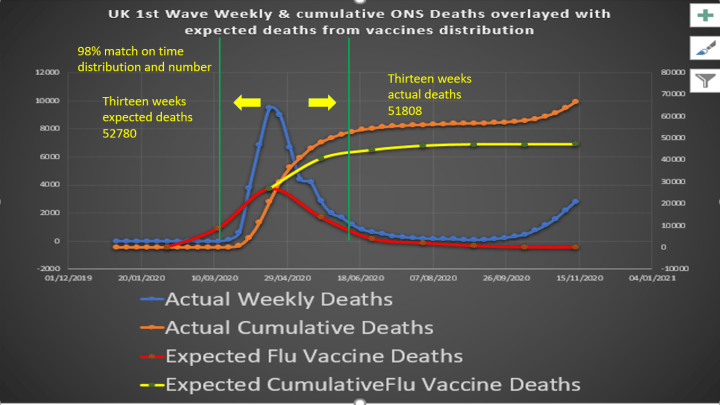
That every ‘authorised person’ refuses to administer any ‘vaccines’ or PCR tests for at least 90 days, in order to determine why it is that mathematical evidence shows such striking correlations between recorded ‘COVID’ deaths, cases and the UK Government’s national vaccination programme.

Demand For Autopsies

For the purposes of which, the People’s Union of Britain will serve notice on the UK Government Cabinet Office, demanding that the suspension of autopsies be lifted and that all lockdown regulations are suspended with immediate effect, pending the gathering of evidence during the proposed 90 day Vaxx and PCR Strike, the outcome of which we intend to rely on as incontrovertible prima facie evidence in the PCP.

The PUB has already set aside £10 million worth of cryptocurrency, to offer financial assistance to any NHS employees who lose their jobs and fall on hard times, as a result of refusing to administer criminal government policy. More funds can be raised, as and when required, which would naturally cover potential legal costs.

Moreover, if what we are alleging in the PCP is true [and it most certainly is], as a result of a nationwide Vaxx and PCR Strike, we would witness a rapid decline and flat-lining in both ‘COVID’ deaths and reported cases, much like we saw between June and September 2020, at the end of the 2019-20 national ‘vaccination’ programme’s adverse events window.

Thereby proving that the UK Government’s ‘vaccination’ programme is entirely founded upon a series of unequivocally dishonest statements, each of which was deliberately intended to create the circumstances required to justify the measures imposed, for the purposes of procuring material gain for themselves, Bill Gates and Big Pharma stakeholders. Fraud-in-the-factum, by another name.

Maximisation of ‘Vaccination’ Uptake

In truth, the motive for the defendants’ conspiracy to commit these most nefarious frauds was and remains deceptively simple: to maximise ‘vaccination’ uptake, both in Britain and the rest of the world.

Make no mistake about it; SAGE is not a scientific advisory committee – it is merely the UK branch of an international, unaccountable, totalitarian, pharmaceutical dictatorship, bought and paid for by the Gates of Hell and Big Pharma’s stakeholders.

However, in the most simplistic terms, were it not for their reliance upon Ferguson’s Imperial College Model, which fraudulently predicted that 50,000,000 people would die of the dreaded lurgy without locking down the whole world, COVID-1984 would never have transpired.

Ferguson’s Chilling Prediction

Nevertheless, whilst most people are currently arguing about whether the government has been lying to us about everything from day one, so called ‘COVID deniers’ now have sufficient prima facie evidence to prove beyond reasonable doubt, that the entire scamdemic is founded upon Ferguson’s prediction that 50 million people would die, from a ‘virus’ which has never been proven to exist, if his lockdown policies were not imposed worldwide.

How utterly chilling it is to contemplate that, in accordance with the WHO’s leaked predicted mortality rate of 377 deaths per 100,000 healthy adults injected, around 520,000 Britons would perish if 68 million were ‘vaccinated’ with both the flu and COVID shots – only 10,000 more than Ferguson’s prediction of 510,000 UK deaths in the initial stage of the ‘pandemic’ he invented, using a computer-generated predictive model which Bill Gates paid for the development of.

End Genocide Now

Despite being up against the clock to get the papers completed as as soon as I am able, I can’t end this update without offering my humble and eternal gratitude to everybody who has contributed to this genuine effort to End Genocide Now, on these shores and everywhere else.

Sincere thanks to each and every one of you, for assisting the PUB in laying waste to all possible defences that our mutual adversaries are capable of mustering in the PCP.

Rest assured that one day very soon they will all come face to face with the consequences of their heinous crimes against the People, when the PUB’s PCP exposes to the world the substantive evidence that the ‘vaccines’ the defendants want each of us to be injected with twice a year kill a minimum of 377 out of every 100,000 healthy adults ‘vaccinated’.

Is Rural America Shrinking? The 2020 Census is expected to say yes—but it depends on what “rural” really means.

There are few scenarios going forward where rural America doesn’t shrink. This is quite evident for people who spend any amount of time outside of America’s more urban areas. That isn’t, however, to say that there isn’t any growth in rural areas.

As we approach the release of information from the 2020 U.S. Census, it is particularly set up to show a shrinking rural America. Some might feel no matter how the numbers come out, that the Census bureaucrats are out of touch with Middle America. But they will probably not be wrong. Rural America really is shrinking.

In hindsight, many small towns and rural communities were almost built with a destiny to shrink. Those in the know have seen this coming for some time. The incredible part, in fact, is that it’s taken this long for it to start happening on a nationwide scale. That in itself is a testament to the life, vibrancy, and love people have for these places.

The fact that so many people have hung in, toughed it out, and stayed behind while others left makes these places a part of our society to be treasured—while at the same time making it almost impossible to save them by the means we’d want to measure them by.

 Growth, rightly or wrongly, seems to be the most important measure in today’s world. “If you’re not growing, you’re dying,” the phrase goes; but many of these places are either not interested in growth, or realize growth would change the very fabric of what makes them what they are.

In the beginning of America’s Westward Expansion, towns were set up at distances determined by logistical needs to get their local resources to the rest of the country or the world. The growing number of defunct towns, or even ghost towns, started as early as the 1800s. As trains replaced horses and highways replaced tracks, their routes and the places they bypassed determined the winners and losers in many rural areas.

Main Street runs through the middle of Ashby, Grant County, Nebraska. Situated in the Sandhills region it is without a doubt rural. There is no official census count for this unincorporated town, but as of 2010 the county had just 614 residents, down from 1,019 in 1970, the last census the county saw growth. Aug. 13, 2016. Copyright Vincent D Johnson/LostAmericana.com.

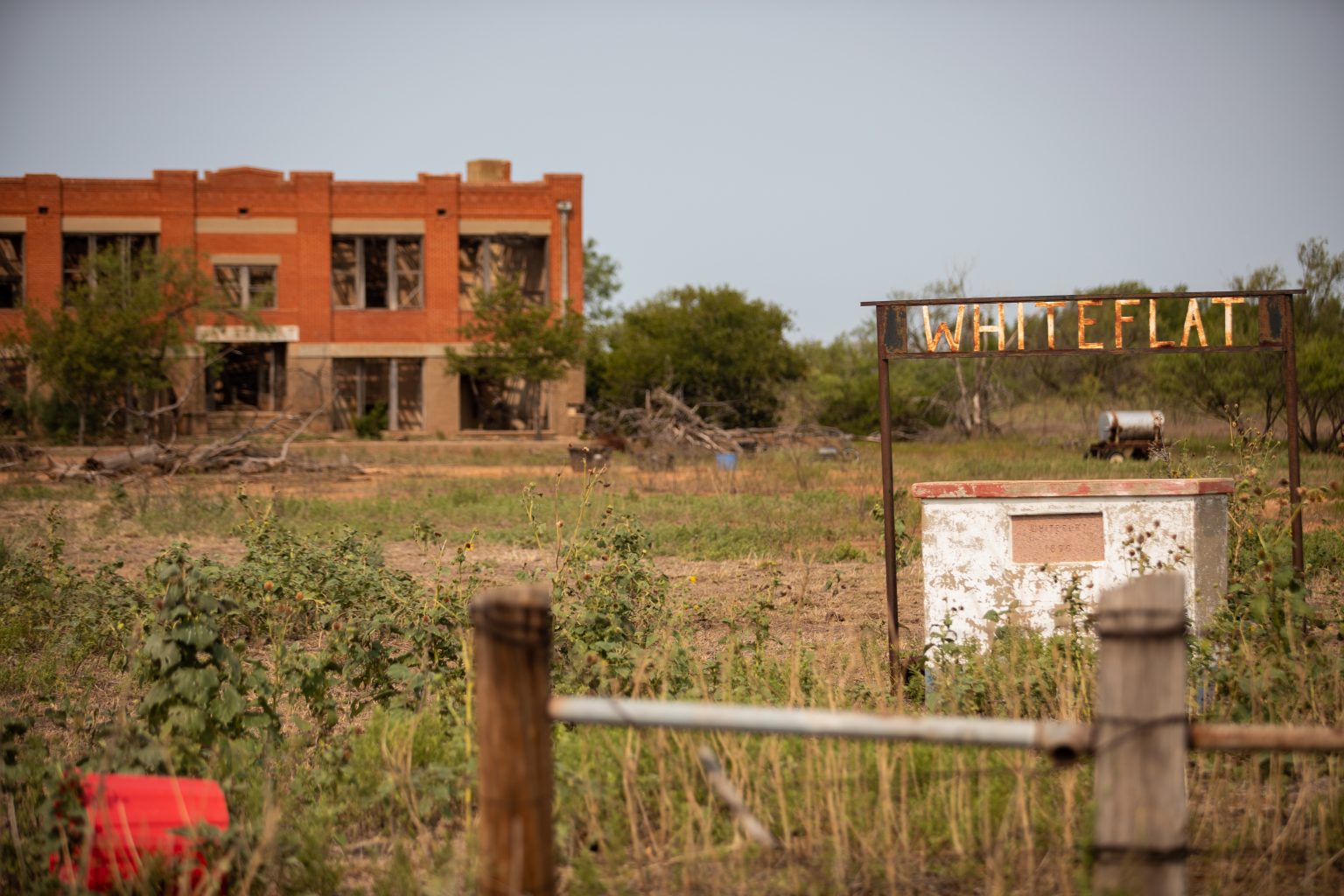
Just about every state is splattered with place names that are all that remains of a pioneering settlement; Tuxedo, Texas; Cardiff, Illinois; Ardell, Kansas. The number of these will surely increase by mid-century.

Since 1790 the United States has been conducting a decennial countrywide census of its population. In 230 years, not once has the population of rural America shown a population loss—not even with the Great Depression. Many of the “rural” areas of today were at one time the hot, new, exciting places to be. The Wild West, the Oregon Trail, and lands open as far as the eye can see still fill the fantasies of today’s pop culture. Those who came before us raced across this open land in search of making their fortune or starting a better life. They risked their lives and often the lives of their families to build up these places. Yet today the opportunities in some of those places are as long gone, as are many of the natural resources that attracted people there in the first place.

And so, starting this year as the data from the 2020 Census is released, the United States might see its first official rural population decrease. This is not a decrease in growth rate, which has been slowing for a while now. This is an absolute decline in the total number of people living in rural America.

While most Americans know about the main census that happens every 10 years, the U.S. Census Bureau does estimates of regional or larger cities at intervals of 1, 3, and 5 years. In 2015, for the first time in U.S. history, one of those estimates showed that rural America hadn’t just stopped growing, but that it had lost people.

The factors are almost too numerous to list: larger farms needing less labor; regional manufacturing leaving small towns; transportation methods changing, along with infrastructure that made personal mobility and choice easier. Add onto that an aging population and difficulty attracting or keeping young people. The writing has been on the wall for decades. 

The Census, like all collections of data, is no perfect measurement. One of the ways it has affected how we look at rural areas is with something the USDA calls the Rural-Urban Continuum Codes (RUCC). An RUCC is assigned to every county in America and essentially designates it statistically as an urban or rural county.

While the RUCC isn’t overly complicated, an easy way to explain it without a bunch of charts is that there are nine different classifications: classes 1-3 are “metro” or urban areas, and classes 4-9 are designated as “nonmetro” or rural areas. Classes are designated by the largest-sized town in the county and then by its counties’ largest-sized town. Class 9 is the most rural while class 1 is the most urban.

So it goes without saying that counties home to America’s largest cities fall into this first class. However, since these classifications include counties adjacent to urban counties, you occasionally have places like Calhoun County, Illinois—with a population of roughly 5,000—designated as a class 1 metro county, solely because it is adjacent to the St. Louis metro area. While the big city may be a short trip as the unladen swallow flies, this 280-square-mile county is a peninsula formed by the Mississippi & Illinois Rivers that is 50 miles long, and with exception to its northern border, is all but cut off from the surrounding area save for a ferry barge and a single bridge.

A one-lane metal truss bridge in Plainfield, Illinois is a holdover from the area’s more rural past. It was replaced by a four-lane concrete bridge in 2012 after the town grew from 4,557 people in 1990 to almost 40,000 in 2010. Fueled by suburban sprawl, its growth counted for urban Will County. Copyright Vincent D Johnson/LostAmericana.com.

At the other end of the classification is RUCC 9, a county that doesn’t have any towns over 2,500 people and is not adjacent to a metro area. Calhoun County, Illinois definitely sounds like it fits that description, as its biggest town, Hardin, has only 1,000 people. However many of the counties that fall into this class are in some of the most far-flung parts of the country, a good distance from the economic possibilities of urban areas, and are without a doubt rural. Places like Loving County, Texas; Arthur County, Nebraska; or Bristol Bay Borough, Alaska.

The point of all this is that, while there’s much talk about the urban/rural divide, there may need to be a little more attention paid to what the urban/rural divide actually is.

At heart, the larger question is, what is “rural”? Does it just refer to the sum of a place’s population? How should census data define what makes a place rural? Has the meaning of “rural” become associated more with a lifestyle than a geographic/demographic region? 

Consider Grundy County, Illinois. A little more than an hour’s drive from Chicago, it is just west of where I grew up in a very urban setting. Having lived there from the mid-1970s through the early ’90s, we would visit friends and family in Grundy County’s towns like Morris, Minooka, and Coal City. We’d drive down gravel roads, past farms and fields, over one-lane metal truss bridges, and stop in town on main streets that were filled with stores. 

To this day I still describe where I grew up as being the divide between the rural and urban parts of northern Illinois. That area was the country. It was rural, but today that line feels like it’s blurred.

Elizabethtown, population 299, is the county seat for Hardin County, Illinois; the county courthouse was built in 1927. Aug. 14, 2019. Don Barrett, Flickr. (CC BY-NC-ND 2.0)

When the USDA first introduced rural and urban coding in 1974, Grundy County had a RUCC of 6. Today it is considered a metro area with a RUCC of 1, matching that of Chicago’s Cook County and many of the surrounding counties that account for the 9.5 million people there.

I still know plenty of people in Grundy, and most wouldn’t consider the area anything but rural. However, they would quickly admit that things have changed, as an influx of new residents has doubled the population since my childhood. The economic opportunity that comes with being so close to a metro area is evident with a drive along the Interstate, as shipping warehouse after shipping warehouse has filled in former farmland, alongside new subdivisions. All of this offers jobs and economic opportunities that weren’t present in this rural county 40 years ago.

With just under 2,000 of the country’s 3,143 counties designated as nonmetro/rural after the 2010 U.S. Census, a very real possibility exists that the overall rural population of 46 million may indeed decrease. Whether this is due to the actual shrinking of rural counties, or more of a statistical artifact due to rural counties growing and becoming designated as urban, remains to be seen.

When I visit Grundy County today, I wonder whether rural America as a whole is being penalized for its success. If growth is the definition of a strong rural area, how long before that area is no longer considered rural? The USDA does have a lot more to say about this than the simple explanation of the classification system here, but the question is very much live and open.

The field in front of this abandoned grain elevator in Grundy County, Illinois is currently being cleared for development. Although the county is mostly farmland, its proximity to Chicago’s suburbs has it listed as an urban county, Nov. 14, 2020. Copyright Vincent D Johnson/LostAmericana.com.

Looking across the country, one sees explosive growth in cities like Austin, Texas; Charlotte, North Carolina; and Columbus, Ohio. Surrounding them are places that are currently small towns and counties seeing the same changes Grundy County did. The people who lived there before this new growth may still feel rural, but most likely their area’s success via proximity will place them and the rest of the population in the urban count, while the remote counties will continue to shrink and bring down the total rural population count.

If only there was a term to describe these places and their saga. Maybe we could call them “postrural.”

Prepare for Permanent Lockdown

It’s not enough to simply say “I won’t submit” when the consequences are minimal. One must be willing to fight back even when the consequences are dire. Being willing to lose everything for what you believe, being willing to possibly die for your values and principles means you are no longer a spectator in history, but an actor that can affect the future. Anything less is not enough to win the war that is coming.”

, pain could become an annoyance for some, but unbearable for others.

If doctors are scarce and medicine becomes even scarcer, this one little weed, found all over North America and , could be a saving grace.

The last four years plus the election of 2020 have revealed that political solutions are out the window. A lot of conservatives should have known better, but maybe it takes a perceived disaster to shock some people out of their waking dreams. Elections, voting, potential third parties; it’s all Kabuki theater. It’s all a facade to keep us docile and under control.

The liberty movement cannot revolve around a single political figure. We cannot bottleneck out efforts into the hands of one man or one political party. The fight is up to us – each of us as individuals. It was ALWAYS up to us.

A different form of organization needs to happen if Americans are going to protect our freedoms; a grassroots approach from the ground up rather than the top down. There will of course be people who stand out as teachers and pioneers, those that lead by example. But overall, the movement will not be acting on orders from on high. Rather, it will be acting according to self-motivation. The liberty movement is not driven by personalities, but by shared principles which take on a life of their own.

I’m not worried about Biden. In fact, his presence may be the best thing to happen to conservative unity in well over a decade. The only thing I worry about, as noted, is who is going to stand their ground, and who is going to give in?

Biden may also be a wake up call for any moderate democrats out there who thought that by voting for a hair-sniffing corporate puppet they might put an end to the division and civil unrest in the nation. I think they will discover that Joe will attract even MORE civil unrest. He may even trigger more looting and rioting by Antifa and BLM during his administration than Trump did, by the simple fact these insane people will assume that Biden will be malleable and easier to exploit.

THE GREAT RESET – 10 GOALS

Biden himself is not all that important; he is nothing more than a foil for bigger events and a proxy for more nefarious people. His presence signals that the “Great Reset” agenda is fully green-lit. This agenda has a pretty obvious set of goals, many of them openly admitted to by the World Economic Forum, and some of them strongly implied by the extreme political left and the media. They include:

1) Perpetual pandemic lockdowns and economic controls until the population submits to medical tyranny.

2) Medical passports and contact tracing as a part of everyday life.

3) The censorship and de-platforming of all voices that oppose the agenda.

4) Greatly reduced economic activity in the name of stopping “climate change”.

5) Greatly increased poverty and the loss of private property.

6) The introduction of “Universal Basic Income” in which the government becomes the all-powerful welfare provider and nursemaid for a generation of dependent and desperate people.

7) A cashless society and digital currency system where privacy in trade is completely erased.

8) creation of a “shared economy” in which no one will own anything and independent production is outlawed.

9) The deletion of national borders and the end of sovereignty and self-determination.

10) The centralization of global political power into the hands of a select few elitists.

Now, you would think that most sensible people would be opposed to such a dystopian agenda. It would inevitably lead to mass death in economic terms, as well as war. Unless you are a psychopath that gets a vicarious thrill from the brutal oppression of millions of people, or you are a globalist that stands to gain immense power, there is nothing about the Reset that benefits you.

That said, there will still be millions of useful idiots that support totalitarian policies, and they will act to enforce them. Some of them will be convinced that they are serving the “greater good”, and others will think that they can “earn a place at the table” if they lick the boots of tyrants long enough. Bottom line? It’s not just the globalists we need to worry about, it is also the contingent of zombies they have duped or bribed into serving the Reset.

THE SCAMDEMIC

The information war is about to take a backseat and a new fight is about to begin. But how will it start?

I believe the first test for conservatives will be Biden’s pandemic response. The Reset agenda and the pandemic are closely intertwined. Do not be misled by calls from Democrats to reopen the economy; there are strings attached.

When New York Governor Andrew Cuomo stated that the state needed to reopen, or there would be “nothing left”, he also consistently hinted that vaccination numbers needed to improve. There are two big lies involved in this narrative – The first is that the vaccination rollout has failed on a technical level.

They want us to believe that only around 60% of the first 2 million vaccine doses have been administered because the state and hospitals failed to get them to citizens fast enough. The truth is, as we’ve seen in numerous polls of Americans and medical staff, millions of people DO NOT WANT to take the vaccine. The situation in New York must be shocking to establishment elites; it’s one of the most leftists states in the US and yet they can’t seem to trick enough people into taking the shot.

The same is true across the country, and it’s not because of bureaucratic failure, it is a propaganda failure.

Second, Cuomo’s statements hint that though lockdowns are destroying the economy, vaccine saturation is paramount. The message is this – “Take the vaccine, or the economy will crash.” The pandemic response is a carrot and stick approach: The lockdowns are the stick, and the re-openings are the carrot.

Of course, even if most people get vaccinated and submit to medical passports and contact tracing like good little slaves, this does not mean life will go back to normal. On the contrary, things will get much worse.

As I have noted in past articles like ‘Waves Of Mutilation: Medical Tyranny And The Cashless Society’, the globalists have admitted that the covid mandates and controls are going to be in place for many years, perhaps forever. Elites at MIT and the Imperial College Of London have written extensively about a strategy I call “Wave Theory”, in which governments constantly batter the public with waves of lockdowns followed by brief windows of partial openings and limited freedom.

The re-openings are a trick, a way to release public tension like a steam valve and make everyone think that the crisis is almost over. Then, the draconian mandates are brought back once again. This will never end. The only way to stop it is to remove the globalists from power and crush the Reset agenda.

PERMANENT LOCKDOWN

A new narrative is already being injected into the mainstream media hinting that even vaccinations will not lead to freedom.

Anthony Fauci and others have argued that those who are vaccinated still need to follow lockdown mandates and wear masks. This policy completely ignores the scientific FACT that the death rate of covid is only 0.26% for anyone outside of a nursing home. It ignores the fact that masks have been consistently proven to do nothing to stop the spread of the virus. It ignores the fact that hospitals across the US have remained mostly empty, with only 15% of capacity in use during Covid . And, it ignores the fact that the vaccines are barely tested experimental cocktails that even the former VP of Pfizer has warned might cause dangerous autoimmune reactions and infertility.

You might be living in one of America’s deathzones and not have a clue about it

On top of this, more and more stories about “covid mutations” are hitting the news wire. They are supposedly more infectious and more deadly than the original (which runs contrary to the natural evolution of the vast majority of viruses), and the mutation in South Africa is also “possibly” unaffected by existing vaccines. There is no concrete proof to support any of the claims, but I think you see where all of this is headed, right?

My guess is that in about two months the CDC and WHO will announce a new global outbreak of a more deadly strain of Covid. They will say the current vaccines are ineffective, and that lockdowns must continue. Hundreds of millions of people around the world are savvy to the old covid-19 scheme, so the elites are going to introduce covid-20, and covid-21, and covid-22, etc.

Biden will call for Level 4 lockdowns similar to those implemented in Europe and Australia, and this is where conservatives must draw a line in the sand and announce that we are not subject to unconstitutional restrictions, that we are breaking free. This will be our first major test.

Affordable Vehicles That Can Survive an EMP (there are many variables that will determine if a given vehicle will survive an EMP attack and to what extent it would survive it)

The energy that heats your food in a microwave, the data sent to your smart phone and the music you listen to on a terrestrial radio – these are all forms of electromagnetic energy.

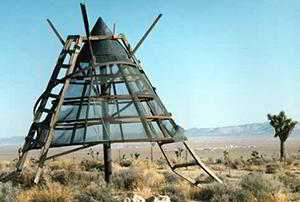
An EMP test tower in Nevada

An EMP test tower in Nevada

What makes the EMP unique is that this electromagnetic energy is sent in large amounts over a very short period of time.

The EMP attack is portrayed as sending modern society back to medieval times. Whether this is true or not is subject to much debate. One often discussed topic is whether a typical vehicle could survive an EMP and if so, what vehicle would have the best chance of doing so.

Conventional wisdom is that the older the vehicle, the more likely it can survive an EMP strike. This may be true in theory, but may not always be true in practice. One reason for this is that modern vehicles have some shielding against unwanted electromagnetic energy interference. For example, car engineers understand that you wouldn’t want a TV, radio, walkie-talkie, Wi-Fi or other wireless signal to interfere with your vehicle’s onboard computers.

But there are many other variables that will determine if a given vehicle will survive an EMP attack and to what extent it would survive it. The only way to know for sure is to actually test the vehicle. But even with extensive testing, you wouldn’t necessary have a perfect list of EMP-proof vehicles.

Therefore, the following list provides a good starting point as to what vehicles stand the best chance of surviving an EMP strike in drivable condition and are also affordable for the average person.


Option 1: 1979 Jeep CJ5 4×4. Average Street Value = $7,100

1979 Jeep CJ5 4x4

The Jeep (AMC) CJ5 is one of the most famous versions of the venerable “Willys Jeep.” Given its reliability and performance, it’s no wonder the CJ5 had one of the longest production runs of any Jeep. Starting in the 1980s, the CJ5 Jeeps were made with more advanced electronics, such as AM/FM radios and more complex electronic control units. Getting a CJ5 older than a 1979 model can’t hurt, but the prices tend to rise as the model years get older, so the affordability advantage is diminished.

Contributing to its EMP survivability is a naturally aspirated engine utilizing a carburetor. As one might expect, the CJ5s are typically found with manual transmissions, which are easier to repair, should the need arise.

The CJ5 also makes a fantastic off-road vehicle, which can be of great use in a survival situation. Lastly, the CJ5 doesn’t stand out too much (except to the most fanatic Jeep fans), so it’s unlikely to draw any unwanted attention.

Related: 10 Things to Have Ready before the Huge EMP !!!


Option 2: 1984 Chevrolet Blazer. Average Street Value = $6,100

Chevrolet Blazer

The Chevrolet Blazer is a popular classic vehicle and it’s easy to see why, given its traditional styling, history and off-road capability. Like other vehicles listed in this article, the 1984 Chevrolet Blazer’s engine uses a carburetor and natural aspiration, so there are fewer sensitive electronics controlling engine performance. The Blazer is also very popular for making additions and modifications, with many options available.

There are other models of the Blazer that would do well surviving an EMP, such as a model from the 1970s or early 1980s, but they are significantly more expensive, almost double the price on the used car market.


Option 3: 1972 Volkswagen Beetle. Average Street Value = $5,900

Volkswagen Beetle

The Volkswagen Beetle is one of the most recognizable vehicles ever manufactured; in fact, it is the best-selling vehicle in history. It’s also another iconic vehicle that’s noted in pop culture (The Love Bug comes to mind).

Starting around 1975, the VW Beetles were made with the Bosch fuel injected engines, which added extra electronics to the vehicle. While this addition is not very advanced by today’s standards, it adds a weak link to the VW Beetle’s EMP resistance. Therefore, most VW Beetles from the early 1970s or older would serve as the most ideal versions for surviving an EMP strike.

If a truck or SUV isn’t your thing, the VW Beetle is definitely a vehicle you should look into getting.


Option 4: 1983 Ford Bronco. Average Street Value = $5,000

The Ford Bronco was first released back in 1966 and was discontinued 20 years later in 1996. However, it’s a popular vehicle and has a bit of history, especially in pop culture (OJ Simpson’s infamous Ford Bronco is of the 1993 model year).

The 1983 Ford Bronco makes a great vehicle for surviving an EMP because it has a naturally aspirated carburetor engine. This means a simple air intake system is used and the air-fuel mixing doesn’t rely on electronic assistance.

But why is the 1983 model recommended in particular? Starting with the 1984 model Ford Broncos, electronic emissions equipment became standard. Besides creating another area of potential failure in an EMP strike, it also reduces the vehicle’s performance. Additionally, certain 1985 Ford Broncos have electronic fuel injection, which creates yet another potential weak point against an EMP.


Other Things to Consider

This article lists only a handful of vehicles that are likely to survive an EMP. Basically, any vehicle from the 1960s or earlier will probably survive an EMP event in drivable, if not perfect condition. However, they’re unlikely to be the most affordable or practical. Obviously, an even older vehicle, such as one that’s steam or animal-powered would have the absolute best chance of surviving the EMP, but they wouldn’t be practical to operate (for most people) and are quite expensive to purchase and maintain.

Even if you find a great vehicle for surviving an EMP, don’t forget other practical considerations, such as parts availability, ease of maintenance and repair, performance, inconspicuousness and fuel availability (gasoline versus diesel).

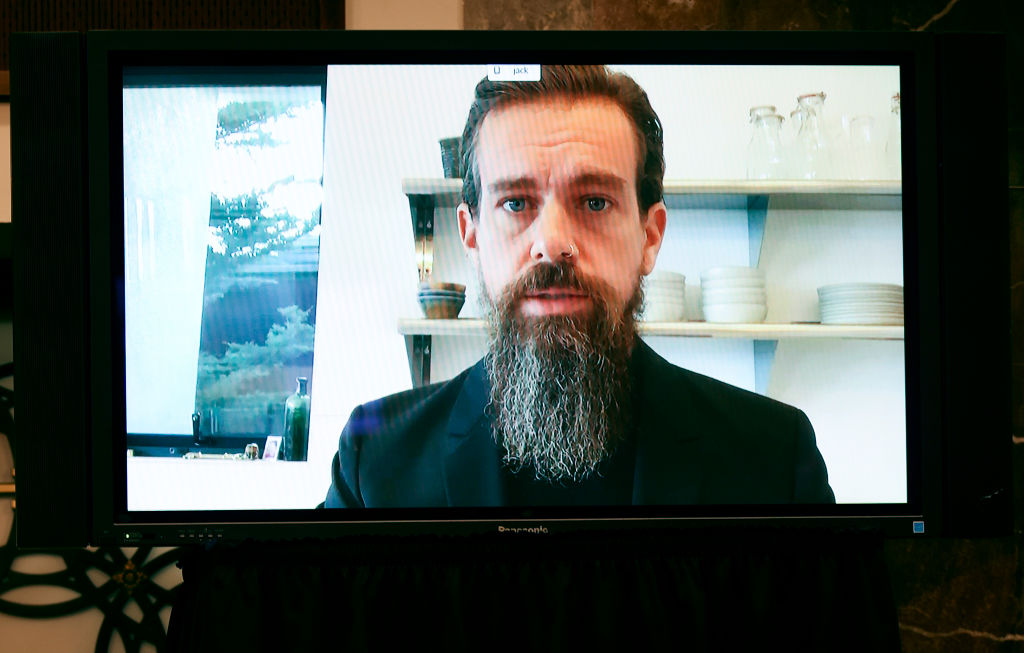
Stand Down @Jack: Why The First Amendment Needs To Be Applied To Social Media

The interplay between the First Amendment and corporations like Twitter, Google, Amazon, Apple, and Facebook is the most significant challenge to free speech in our lifetimes. Pretending a corporation with the reach to influence elections is just another place that sells stuff is to pretend the role of debate in a free society is outdated.

From the day the Founders wrote the 1A until very recently, no entity existed that could censor on the scale of big tech other than the government. It was difficult for one company, never mind one man, to silence an idea or promote a false story in America, never mind the entire world. That was the stuff of Bond villains.

The arrival of global technology controlled by mega-corporations like Twitter brought first the ability the control speech and soon after the willingness. The rules are their rules, and so do we see the permanent banning of a president for whom some 70 million Americans voted from tweeting to his 88 million followers (ironically the courts had earlier claimed it was unconstitutional for the president to block those who wanted to follow him). Meanwhile, the same censors allowed the Iranian and Chinese governments (along with the president’s critics) to speak freely. For these companies, violence in one form is a threat to democracy while violence in another similar form is valorized under a different colored flag.

The year 2020 also saw the arrival of a new tactic by the global media: sending a story down the memory hole to influence an election. The contents of Hunter Biden’s laptop, which strongly suggest illegal behavior on his part and unethical behavior by his father the president, were purposefully and effectively kept from the majority of voters. It was no longer for a voter to agree or disagree; it was to know and judge yourself or remain ignorant and just vote anyway.

Try an experiment. Google “Peter Van Buren” with the quote marks. Most of you will see on the first page of results articles I wrote four years ago for outlets like The Nation and Salon. Almost none of you will see the scores of columns I’ve written for The American Conservative over the past four years. Google buries them.

The ability of a handful of people nobody voted for to control the mass of public discourse has never been clearer. It represents a stunning centralization of power. It is this power that negates the argument of “go start your own web forum.” Someone did—and then Amazon withdrew its server support and Apple and Google banned their app.

The same thing happened to the Daily Stormer, which was driven offline through a coordinated effort by the tech companies and 8Chan and deplatformed by Cloudflare. Amazon partner GoDaddy deplatformed the world’s largest gun forum AR15. Tech giants have also killed off local newspapers by gobbling up ad revenues. These companies are not, in @jack’s words, “one small part of the larger public conversation.”

The tech companies’ logic in destroying the conservative social media forum Parler was particularly evil—either start censoring like we do (“moderation”) or we shut you down. Parler allowing ideas and people banned by the others is what brought about its demise. Amazon, et al, wielded their power to censor to another company. The tech companies also claimed that while Section 230 says we are not publishers, we just provide the platform, if Parler did not exercise editorial control to big tech’s satisfaction, it was finished. Even if Parler comes back online, it will live only at the pleasure of the powerful.

Since democracy was created, it has required a public forum, from the Acropolis to the town square on down. That place exists today, for better or worse, across global media. It is the seriousness of the threat to free speech that requires us to move beyond platitudes like “it’s not a violation of free speech, just a breach of the terms of service!” People once said “I’d like to help you vote ladies, but the Constitution specifically refers to men.” That’s the side of history some are standing on.

This new reality must be the starting point, not the endpoint, of discussions about the First Amendment and global media. Facebook, et al, have evolved into something new that can reach beyond their corporate borders, beyond the idea of a company that just sells soap or cereal, beyond the vision of the Founders when they wrote the 1A. It is hard to imagine Thomas Jefferson endorsing a college dropout determining what the president can say to millions of Americans. The magic game of words—it’s a company so it does not matter—is no longer enough to save us from drowning.

Tech companies currently work in casual consultation with one another, taking turns being the first to ban something so the others can follow. The next step is when a decision by one company ripples instantly across to the others, and then down to their contractors and suppliers as a requirement to continue business. The decision by AirBnB to ban users over their political stances could cross platforms so a person could not fly, use a credit card, etc., turning him essentially into a non-person unable to participate in society beyond taking a walk. And why not fully automate the task, destroying people who use a certain hashtag, or who like an offending tweet? Perhaps create a youth organization called Twitter Jugend to watch over media 24/7 and report dangerous ideas? A nation of high school hall monitors.

Consider linkages to the surveillance technology we idolize when it helps arrest the “right” people. So with the Capitol riots do we fetishize how cell phone data was used to place people on site, coupled with facial recognition run against images pulled off of social media. Throw in calls from the media for people to turn in friends and neighbors to the FBI, alongside amateur efforts across Twitter and even Bumble to “out” participants. The goal was to jail people if possible, but most loyalists seemed equally satisfied if they could cause someone to lose their job. Tech is blithely providing these tools to users it approves of, knowing full well how they will be used. Orwellian? Orwell was an amateur.

There are legal arguments to extend limited 1A protections to social media. Section 230 could be amended. However, given that Democrats benefit disproportionately from corporate and government censorship, no legislative solution appears likely. Such people care far more about the rights of some citizens (trans people seem popular now; it used to be disabled folks) than the most basic right for all the people.

They rely on the fact that it is professional suicide today to defend all speech on principle. It is easy in divided America to claim the struggle against fascism (racism, misogyny, white supremacy, whatever) overrules the old norms. And they think they can control the beast.

But imagine that someone’s views, which today might match @jack’s and Zuck’s, change over time. Imagine that Zuck finds religion and uses all of his resources to ban legal abortion. Consider a change of technology that allows a different company, run by someone who thinks like the MyPillow Guy, to replace Google in dictating what you can read. As one former ACLU director explained, “Speech restrictions are like poison gas. They seem like they’re a great weapon when you’ve got your target in sight. But then the wind shifts.”

The election of 2020, when they hid the story of Hunter Biden’s laptop from voters, and the aftermath, when they banned the president and other conservative voices, was the coming-of-age moment, the proof of concept for media giants that they could operate behind the illusion of democracy.

Hope rests with the Supreme Court expanding the First Amendment to social media, as it did when it grew the 1A to cover all levels of government, down to the hometown mayor. The Court has long acknowledged the flexibility of the 1A in general, expanding it over the years to acts of “speech” as disparate as nudity and advertising. But don’t expect much change anytime soon. Landmark decisions on speech, like those on other civil rights, tend to be evolutionary and in line with societal changes rather than revolutionary.

It is sad that many of the same people who quoted that “First they came for…” poem about Trump’s Muslim ban are now gleefully supporting social media’s censorship of conservative voices. The funny part is that both Trump and Twitter claim what they did was for people’s safety. One day we’ll all wake up and realize it doesn’t matter who is doing the censoring, the government or Amazon. It’s all just censoring.

What a sad little argument “But you violated the terms of service nyah nyah!” is going to be then.

Biden’s Federal Land Lease Ban To Send U.S. Oil Prices Higher

Oil stocks tumbled following [Thursday’s] one-two punch of Biden energy news, when first we learned that the Interior Department enacted a 60-day moratorium on issuing oil and gas leases that affects all federal lands, minerals, and waters, which was followed by news that Biden was set to fully suspend the sale of oil and gas leases on federal land, which accounts for about a tenth of U.S. supplies.

Yet while E&P companies sold off sharply on the news, one can argue that the decision wasn’t exactly a surprise for the drillers themselves, because as the following chart from BofA shows, federal drilling permits spiked into year-end as companies clearly anticipated a ban on drilling on federal lands.

But it’s not just speculation about what impact on drillers – and especially frackers will be – Biden’s intervention will have: an just as important question is what to expect on the price of oil as a result.

Well, overnight, Goldman’s commodity team said that a lack of urgency from the US government to lift Iranian sanctions and a push for larger fiscal spending support the constructive view on oil and gas prices; at the same time it estimated that a 2 trillion stimulus over 2021-2022 would increase US demand by 200k bpd and stated that delays in a full return of Iran production would support the bullish oil outlook. Goldman’s summary, which could say is obvious: “policies to support energy demand but restrict hydrocarbon production (or increase costs of drilling and financing) will prove inflationary in coming years given the still negligible share of transportation demand coming from EVs (and renewables).

In short, just what Putin and the Crown Prince ordered.

Below we excerpt from Goldman’s note:

Initial orders by the Biden administration include restrictions on North American hydrocarbon leasing, drilling and pipelines. In turn, initial comments suggest no urgency in lifting sanctions with Iran. Combined with a push for greater fiscal spending – and hence higher energy demand – these initial actions reinforce our constructive view on oil and gas prices. As we have argued, policies to support energy demand but restrict hydrocarbon production (or increase costs of drilling and financing) will prove inflationary in coming years given the still negligible share of transportation demand coming from EVs (and renewables).

  • The Interior Department imposed on Wednesday a 60-day moratorium on oil and gas leases and drilling permits on federal lands, minerals, and waters. This order is temporary and has no impact on near-term activity as producers had aggressively accumulated federal drilling permits. While temporary, this order nonetheless suggests that the new administration views its pledge to halt leasing on federal lands as a priority of its climate plan, with such a broader moratorium on federal leasing potentially scheduled for next week according to Bloomberg. As we argued ahead of the election, such actions point to both higher production and financing costs for shale producers in coming years as well as lower recoverable resources. The additional orders to impose a moratorium on leasing activity in Alaska’s Arctic National Wildlife Refuge and to revoke Keystone XL’s border permit point to a similar regulatory shift.
  • On their own, these actions do not point to a faster tightening of the oil market. in 2021-22, as a ban on permitting would still leave a window of up to two years to drill from elevated outstanding permits. In fact, this would likely shift drilling activity away from private to federal land (for example from the Midland to the Delaware basin) for a couple years to minimize the loss of recoverable resources. While producers are focused on shareholder returns over production growth,investors may support more aggressive drilling to secure future cash flows, potentially creating a modest headwind to sharply higher oil prices in the next few years. The administration’s focus on fiscal spending and recent foreign policy comments are, however, likely to help tighten the oil market in 2021-22.
  • The release of President Biden’s COVID-relief plan has led our economists to increase their assumption for additional fiscal measures from $750bn to $1.1tn. Larger boosts to disposable income and government spending will make this recovery energy intensive long before it hurts oil demand, in our view, especially as they come alongside those in China and the EU. On our estimates, a $2 trillion stimulus over 2021-22 would for example boost US demand by c. 200 kb/d. Such spending would further contribute to a weakening dollar which itself lends support to oil prices. A faster vaccination roll-out would in turn accelerate the rebound in jet fuel consumption, which still accounts for more than half of the remaining lost oil demand.
  • Finally, the new administration’s focus on reaching bi-partisan policy support suggest a lessened incentive to quickly revisit the divisive Iran nuclear deal. While the US president has significant freedom to re-enter the JCPOA agreement (see Appendix),the confirmation hearing for the US Secretary of State and Treasury Secretary focused on the need for consultation with Congress and US allies, on Iran being non-compliant and on the goal of reaching a stronger and longer new deal. We view such statements as consistent with our assumption that the increase in Iran exports will remain moderate in 2021 (we assume 0.5 mb/d in 2H21) with in fact risks that our assumed full recovery in Iran production in 2Q22 proves optimistic. Delays in a full return of Iran production would reinforce our bullish oil outlook since we already forecast a tight 2022 crude market with low OPEC spare capacity.
  • Stronger demand and a slower ramp-up in Iran production would create a larger call non shale production, which will face higher regulatory costs, leading to further increases in long-dated oil prices. The oil market experienced such an outcome in 2018, when the loss of Iran production and strong economic growth pushed oil prices sharply higher. As we argued at the time, the rally to $80/bbl Brent prices was necessary to bring high-cost Bakken barrels to the global market by rail. Notably, the potential halt to Dakota Access Pipeline flows could recreate such conditions incoming years (the pipeline may need a new Environmental Impact Study from the Army Corps of Engineers, which is led by a presidential appointee which could stay its operations).
Design a site like this with WordPress.com
Get started